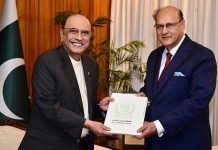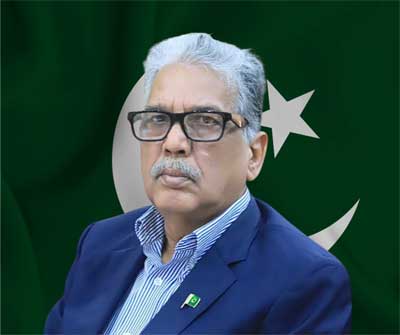
The nomination of Mr. Isphanyar Bhandara by the Prime Minister as a member of the Parliamentary Committee responsible for the appointment of the Chairperson of the National Commission for Minorities Rights represents an important step toward strengthening inclusive governance and ensuring that the voices of Pakistan’s minority communities are reflected in national decision-making processes. At a time when the role of representative institutions is being closely examined across the world, such a nomination highlights the country’s commitment to pluralism, constitutional rights and the protection of minority communities.
Pakistan’s constitutional framework guarantees equality of citizenship and protection of religious and cultural rights for all communities. Over the decades, the country has taken various institutional measures to safeguard these rights, including the establishment of bodies tasked with monitoring minority issues, promoting harmony and ensuring that the concerns of marginalized groups are addressed within the national policy framework. The National Commission for Minorities Rights is one such institution that holds particular significance because it acts as a platform through which the grievances, aspirations and challenges faced by minority communities can be formally communicated to the state.
The process of appointing the Chairperson of such a commission carries great responsibility. The position requires an individual capable of representing diverse communities, engaging with government institutions and promoting policies that strengthen social cohesion and mutual respect among citizens of different faiths and cultural backgrounds. For this reason, the composition of the parliamentary committee responsible for this appointment is itself a matter of great importance. The inclusion of individuals who understand the lived realities of minority communities helps ensure that the selection process remains balanced, informed and reflective of the broader national commitment to equality.
In this context, the nomination of Mr. Isphanyar Bhandara holds particular significance. As a parliamentary representative associated with some of Pakistan’s least numerous minority communities, many of which are located in remote and distant regions of the country, his presence in the committee ensures that these communities are not overlooked in national discussions. Smaller minority groups often face unique challenges. Their geographic isolation and limited numbers can sometimes make it difficult for their concerns to receive adequate attention within mainstream political discourse. Representation within important parliamentary forums therefore becomes an essential mechanism for ensuring that their perspectives are heard and considered.
Mr. Bhandara’s nomination symbolizes an acknowledgment of this reality. It reinforces the principle that representation should not be determined solely by numbers but should also reflect the diversity of communities that form the fabric of the nation. By including a representative who is closely connected with smaller minority groups, the government demonstrates an understanding that inclusive governance requires both visibility and participation for all segments of society.
The Prime Minister’s decision to nominate Mr. Bhandara to the committee also reflects a broader commitment to strengthening democratic institutions. Inclusive governance is not merely a political slogan but a practical approach to policymaking that ensures that all citizens feel a sense of belonging within the national framework. When communities see their representatives participating in important institutional processes, it builds confidence in democratic mechanisms and reinforces the idea that the state values every citizen equally.
Pakistan’s history contains numerous examples of individuals from minority communities contributing significantly to the country’s development in fields ranging from public service and law to business, education and the arts. These contributions highlight the fact that diversity is a source of strength rather than division. Institutions like the National Commission for Minorities Rights play a vital role in nurturing this spirit by promoting dialogue, addressing misunderstandings and encouraging policies that foster harmony among different communities.
The parliamentary committee responsible for selecting the commission’s chairperson carries the responsibility of identifying a leader who can guide the institution with fairness, integrity and sensitivity to the needs of minority populations. In this regard, the perspectives of committee members such as Mr. Bhandara can be invaluable. His experience and understanding of the challenges faced by smaller minority communities can contribute to a more comprehensive evaluation of potential candidates and help ensure that the commission remains responsive to the concerns of all groups.
Another important aspect of this nomination is its symbolic value. Representation often carries meaning beyond the immediate institutional function it serves. For minority communities living in distant parts of the country, seeing one of their representatives involved in national decision-making processes can be a powerful reminder that their voices matter. It signals that the state recognizes their presence and values their participation in shaping the country’s future.
Furthermore, such gestures contribute to strengthening social cohesion. In societies marked by cultural and religious diversity, trust between communities and institutions is built through consistent demonstration of fairness and inclusion. When the government ensures that minority representatives are included in key committees and policy discussions, it helps create an environment where citizens from all backgrounds feel respected and protected.
The nomination of Mr. Isphanyar Bhandara therefore represents more than a procedural decision. It reflects a broader vision of governance that seeks to integrate diverse voices into the democratic process. It demonstrates an understanding that meaningful representation requires attention to communities that may otherwise remain on the margins due to their smaller population size or geographic distance from major political centers.
As the parliamentary committee proceeds with its responsibility of appointing the Chairperson of the National Commission for Minorities Rights, the presence of representatives like Mr. Bhandara will help ensure that the process remains inclusive and attentive to the needs of all communities. Such steps strengthen the credibility of institutions and reinforce the principles of equality and justice that form the foundation of Pakistan’s constitutional order.
Ultimately, the success of any democratic system depends on the confidence citizens place in its institutions. By ensuring that minority representatives participate in important decision-making processes, the government sends a clear message that the rights and dignity of every community remain integral to the nation’s progress. The nomination of Mr. Isphanyar Bhandara to the parliamentary committee is therefore a welcome development that underscores Pakistan’s continuing efforts to promote inclusivity, representation and democratic participation for all its citizens.