


KARACHI: As the Japan Mobility Show 2025 unfolds in Tokyo, industry analysts and business leaders are urging Pakistan to swiftly integrate into the global “auto-mobility value chain” – a transformation viewed as crucial for the country’s industrial survival in an increasingly electrified and technology-driven world.
The prestigious international exhibition, taking place from October 31 to November 9 at Tokyo Big Sight, has brought together the world’s leading automakers, technology firms, and mobility innovators under one roof. Japan’s major manufacturers Suzuki, Toyota, Honda, Mazda, and Subaru are showcasing next-generation electric vehicles (EVs), hydrogen-powered prototypes, and artificial intelligence-enabled mobility solutions that define the future of transport.
A high-level Pakistani delegation, led by Hiroshi Kawamura, Managing Director of Pak Suzuki Motor Company Ltd, along with his marketing team members Amir Shaffi and Ikhlaq Ahmed Virk were attending the show alongside Senator Syed Sarmad Ali, President APNS, and Managing Director of the Jang Group, Geo TV, and The News. Their presence underscores the deep-rooted Japan-Pakistan partnership in the automotive sector, one now entering a decisive phase of transformation.
At the Suzuki Pavilion, Toshihiro Suzuki, President and CEO of Suzuki Motor Corporation, addressed an international audience of journalists, presenting the company’s vision for human-centered and sustainable mobility under the theme “By Your Side.” He highlighted electrification, innovative design, and customer-focused technology as the guiding principles that will shape Suzuki’s direction over the next decade.
For Pakistan, these developments carry significant economic implications. The country’s automotive sector – long reliant on traditional assembly operations – now stands at a critical crossroads. Experts warn that unless Pakistan embraces electric mobility, component localization, and advanced technology, it risks losing competitiveness in the region’s rapidly evolving market.
“Pakistan’s participation in the Japan Mobility Show 2025 through Pak Suzuki is highly symbolic, but the message is unmistakable: we must shift gears from traditional assembly to global integration,” said Mubasher Mir, President of the Karachi Editors Club (KEC). “This decade will define the future of Pakistan’s automotive industry. The world is transitioning toward clean energy and smart transport and we can no longer afford to lag behind.”
Ikhlaq Ahmed Virk, a senior official of Pak Suzuki Motor Company, emphasized that the government must introduce a forward-looking automotive policy focusing on CBG infrastructure, technology transfer, and skill development. He suggested that Pakistan collaborate with Japanese manufacturers to establish local production of CBG vehicles and their components, enabling the country to align with global mobility trends.
Virk further noted that organizations such as the Japan International Cooperation Agency (JICA) and the Japan External Trade Organization (JETRO) could play a vital role in supporting technology transfer, vocational training, and industrial investment within Pakistan’s mobility sector. “Our longstanding relationship with Japan should now evolve into a partnership for joint innovation,” he added.
With global demand for clean energy vehicles surging, regional competitors such as Thailand, Vietnam, and Indonesia have already secured their place. Industry leaders caution that Pakistan risks being left behind unless immediate policy reforms and investment incentives are implemented.
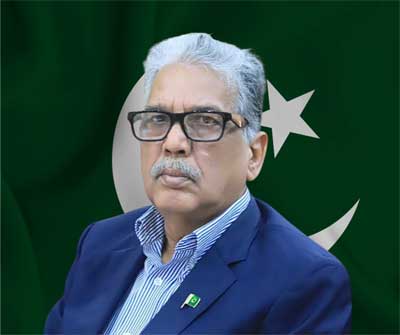
“Mobility today extends far beyond cars, it encompasses connectivity, data, energy, and design,” said Senator Syed Sarmad Ali during an interaction with media representatives in Tokyo. “Pakistan’s youth, entrepreneurs, and engineers have the creativity and capacity to participate in this new ecosystem provided they are equipped with the right tools, technology, and direction.”
The Japan Mobility Show 2025 continues through next week and is expected to attract over one million visitors from around the world. For Pakistan, the lessons from Tokyo are both urgent and clear: the future belongs to nations that innovate, integrate, and invest in mobility that drives not just vehicles but entire economies forward.
Pakistan’s auto industry urged to join Global Mobility Revolution
Previous article

Next article

