

Approximately two and a half to three hundred years ago, in united India, there existed a small and unknown settlement comprising a few houses, referred to locally in the Saraiki language as a "Jhok" (small village). Located east of Mangrotha, the capital of a free Baloch state, this settlement was known as Taunsa. In this small village, a few families from the Chacha Pathan and Bhutta clans resided. Interestingly, there are two different traditions regarding the origin of the name Taunsa. According to ancient historical sources, the inhabitants used to keep peacocks (Taoos in Persian) in their homes; thus, the name 'Taunsa' is derived from 'Taoos'. However, some historians suggest that this seems more plausible than that the area was barren and lacked water, and due to this severe water scarcity (Tashnaq), the place came to be called Taunsa. The State of Sanghar, led by the Baloch tribe of Nutkani, a branch of the Rind tribes, was governed by Nawab Mir Aali Khan Nutak and his fifteen sons. Over time, however, this independent state weakened under the pressure of changing circumstances. Taking advantage of its declining strength, the Sikhs subjugated it, and the last ruler of Sanghar, Nawab Asad Khan Nutkani, managed to maintain his rule by paying annual tribute to the Sikhs. During Nawab Asad Khan's reign, a spiritual and scholarly personality, Hazrat Khawaja Shah Muhammad Suleman (may Allah have mercy on him), on the instructions of his spiritual guide Hazrat Khawaja Noor Muhammad Maharvi (may Allah have mercy on him), relocated from Koh Darg, a settlement of the renowned Jafar Pathan tribe east of Musakhel, to make Taunsa Sharif his permanent residence. Due to his spiritual influence, the small settlement of Jhok grew into a town and eventually a city, becoming renowned as Taunsa Sharif far and wide. Meanwhile, the Nutkani brothers, amid internal disputes, began losing political influence. Consequently, the state lost its existence during the conflicts between the British and Sikhs. Taunsa Sharif then became part of the British-controlled territories and remained under the administration of the Kolachi tehsil of Dera Ismail Khan. To the north of Taunsa Sharif lies the ancient town of Vehova, inhabited by the Khitran and Pathan tribes, who maintain significant political standing. After the partition of Pakistan, Vehova was merged into Punjab and declared a tehsil of the Dera Ghazi Khan district. In Tehsil Taunsa Sharif, prominent Baloch tribes such as the Qaisrani and Buzdar are present, along with the descendants of Nawab Mir Aali Khan Nutat's fifteen sons. Among the Nutkani tribes, notable for refusing to accept British rule and maintaining their pride, are the Malghani, Tangwani, and Maklani tribes, all of whom hold significant political influence. When Hazrat Khawaja Shah Muhammad Suleman, also known as Pir Pathan (may Allah have mercy on him), settled permanently in Taunsa Sharif, people from distant areas began flocking to him, drawn by the magnetic pull of his personality. To cater to the educational needs of the growing population, Hazrat Khawaja established a grand seminary where the Qur'an, Hadith, Tafsir (exegesis), medicine, chemistry, geography, mathematics, astronomy, Arabic, and Persian were taught. At its peak, around two hundred years ago, the Darasgah Sulaimania (Sulaimania Seminary) had dozens of expert teachers who were paid handsomely. A comprehensive system of free lodging and meals was in place for scholars, students, and travellers. This seminary produced many great scholars and ignited a passion for education among the local population, reaching remarkable heights. The blessings of this seminary spread as far as Sial Sharif, Makhad Sharif, Lillah Sharif, and Golra Sharif. Hazrat Khawaja Allah Bakhsh Gharib Nawaz, the famous grandson of Hazrat Khawaja Shah Suleman, had a network of disciples that extended far and wide. Even the famous writer Hassan Nizami was among his followers. Khawaja Allah Bakhsh was greatly fond of construction work and often said that he encouraged construction to make the people of Taunsa hard-working rather than beggars exploiting visitors. Due to this tradition, the population became diligent and hard-working. In modern times, this spirit has further strengthened, and Taunsa Sharif has come to be known as "Little Greece". Taunsa Sharif has produced prominent intellectuals, educationists, generals, and high-ranking administrative officers. From Fikr Taunsvi, who migrated to India, to Dr Tahir Taunsvi, and poets of the Saraiki language such as Mustafa Khadim, Basheer Ghamkhar, Faryad Herovi, and Tehzeeb Hafi, many distinguished personalities have emerged from Taunsa Sharif. Military figures such as General Hamza Khan Qaisrani, Brigadier Saif Malik, Major Dr Muhammad Shafiq Khan Tangwani, Colonel Fakhar Zaman Khan Malghani, and Colonel Tufail Khan Malghani have served the nation with distinction, and this legacy continues. Even today, youth from Taunsa Sharif are studying at universities across the country and abroad, contributing to national development. It would be hard to find an institution in Pakistan that does not have someone from Taunsa Sharif. May Allah continue this journey of progress, Ameen. To the west of Taunsa Sharif lies the Sulaiman Mountain Range, inhabited by Baloch tribes, among whom is Sardar Muhammad Usman Khan Buzdar, former Chief Minister of Punjab. To the east flows the mighty Indus River (Darya-e-Sindh), which plays a vital role in the region's prosperity. The Chashma Right Bank Canal also enters the area, though it often suffers from local disputes and frequent closures.
 Views & Opinions
History Of Taunsa Sharife
Quick read5 key points · 30 sec
- Approximately two and a half to three hundred years ago Taunsa was a small Saraiki jhok east of Mangrotha in united India.
- Hazrat Khawaja Shah Muhammad Suleman settled in Taunsa during Nawab Asad Khan Nutkani’s reign and his spiritual influence transformed the jhok into Taunsa Sharif.
- The Darasgah Sulaimania seminary taught Qur'an, Hadith, tafsir, medicine and sciences, employed dozens of teachers and provided free lodging and meals around two hundred years ago.
- Taunsa Sharif became part of British territories after Nutkani decline, later remained in Kolachi tehsil of Dera Ismail Khan and Vehova merged into Punjab after partition.
- Taunsa Sharif produced scholars, poets and military officers including General Hamza Khan Qaisrani and remains known for youth studying across Pakistan and abroad.
Summary created with AI from this story. The full story follows below.
More quick reads
 Nvidia’s leadership under scrutiny5 key points
- An independent inquiry is examining reports that CEO Jensen Huang was targeted by a foreign intelligence operation, with reporting snapshot dated 12 November 2026.
- Nvidia announced the review on November 8, led by independent directors; Huang acknowledged an extramarital affair and pledged to cooperate with the investigation.
- On November 10 independent directors hired former acting U.S. attorney Joon H. Kim and firm Wachtell, Lipton, Rosen & Katz to conduct the investigation.
- CNN reported directors discussed Huang’s future on November 11, and Nvidia’s after‑hours share move was −8.6% following a +2.9% regular session.
- Next steps are a formal board announcement on Huang’s role, findings from the independent investigation, and any U.S. enforcement action involving chip exports.
 Pakistan Minerals Investment Forum 2026 Opens in Islamabad, Drawing Investors from Over 60 Countries5 key points
- The two-day Pakistan Minerals Investment Forum 2026 commenced in Islamabad on Thursday, drawing investors and representatives from more than 60 countries to explore mineral-sector opportunities.
- Deputy Prime Minister Ishaq Dar said Pakistan's mineral wealth is a strategic national economic priority under Prime Minister Shehbaz Sharif and pledged a transparent, investor-friendly environment.
- The Special Investment Facilitation Council (SIFC) is expected to coordinate federal and provincial institutions and facilitate foreign investment in major mineral projects.
- Balochistan Chief Minister Mir Sarfraz Bugti said Reko Diq is expected to become operational by 2029 and an additional security division has been established.
- Punjab Chief Minister Maryam Nawaz Sharif said Mines and Minerals Department revenue increased to approximately Rs40 billion over the past two and a half years.
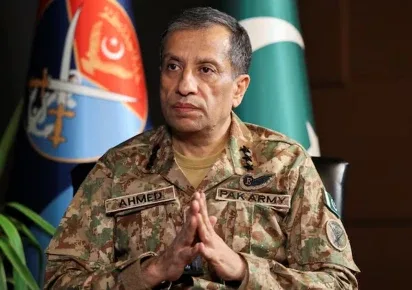 Pakistan's Commitment to Saudi Arabia's Security Non-Negotiable: DG ISPR5 key points
- Pakistan reaffirms unwavering commitment to safeguarding Saudi sovereignty and Two Holy Mosques, DG ISPR Lt Gen Ahmed Sharif Chaudhry said in Asharq Al-Awsat interview.
- Makkah Joint Defence Alliance is moving into practical implementation phase to strengthen coordination, rapid deployment and intelligence-sharing among participating forces.
- The implementation follows Pakistan-Saudi bilateral defence agreement of September 2025 and Makkah Joint Defence Agreement with Turkiye in August 2026.
- Pakistani military personnel are already stationed in Saudi Arabia supporting defensive operations, exercises, training and joint manoeuvres, DG ISPR confirmed but declined to disclose numbers or locations.
- On October 26, representatives of the Makkah Joint Defence Alliance met Iran to explore de-escalation, with Pakistan's CDF Field Marshal Syed Asim Munir participating.
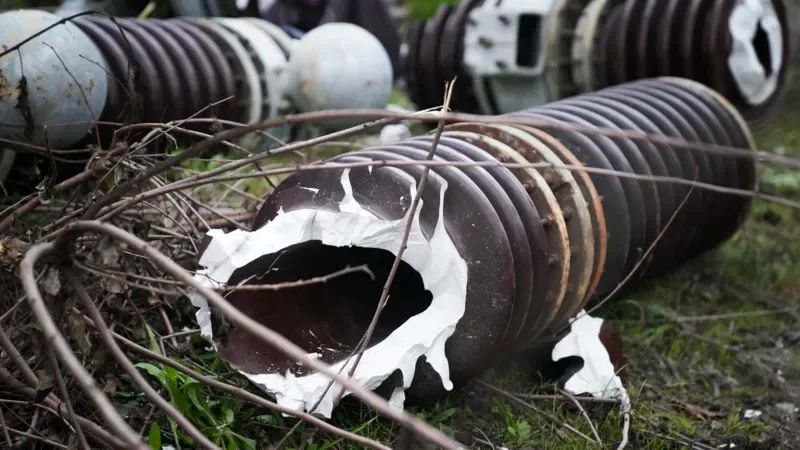 Ukraine Faces Deepening Winter Crisis as Russian Strikes Cripple Power Grid5 key points
- Intensified Russian missile and drone attacks have damaged Ukraine’s electricity infrastructure, leaving millions facing prolonged blackouts, disrupted water supplies and inadequate heating as winter falls.
- Authorities introduced extensive power rationing in major cities including Kyiv, where some households face outages lasting up to 20 hours a day.
- Single mother Daryna Kulchytska said her family sometimes receives only four or five hours of electricity a day, leaving lifts, internet and water pumps inoperable.
- A major power station was rendered inoperable by a Russian ballistic missile, with employee Volodymyr Kovalenko saying the damage was more destructive than previous strikes.
- DTEK chief Maxim Timchenko warned attacks have roughly doubled and full restoration could take until at least next summer, with repairs limited to one or two hours daily.

Related topics
About the writer
Muhammad Hadi Raza Khan
Student, National University of Modern Languages
All articles by Muhammad Hadi Raza Khan →
Link to or cite this article
Quoting this story on your website, blog or LinkedIn? Please link back to it.
Read next
Views & Opinions
Who Rebuilds the Home? A Million Houses.
Views & Opinions
Pak Navy turned a dream into reality
Views & Opinions
World Science Day for Peace and Development: Reclaiming the Muslim World's Scientific Glory
Views & Opinions
New Provinces in Pakistan: An Administrative Necessity or a Political Debate?
Views & Opinions
Transparency in tax policy who really pays price?
Views & Opinions