When examination security fails, the cost should not land on the students who kept the rules.
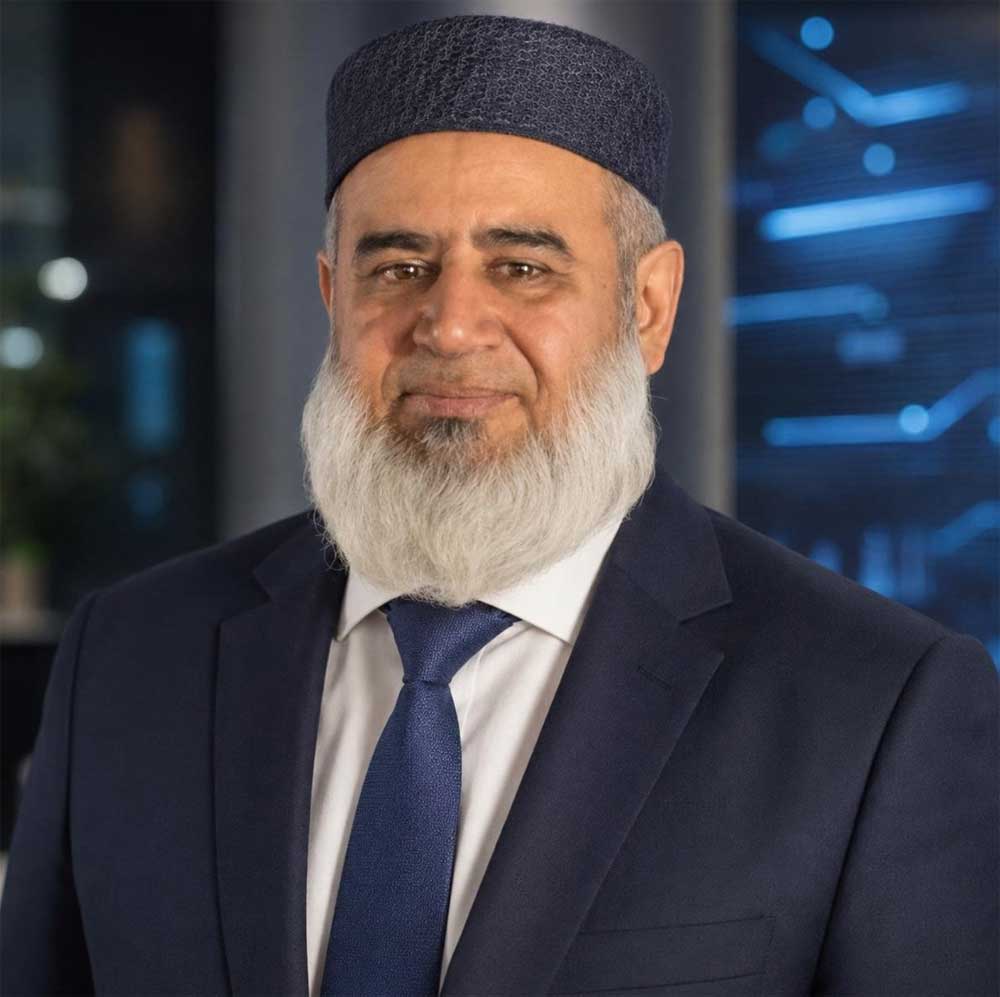
Students should not bear the consequences of examination-paper leaks they had no role in causing, Shahzad Arif, CEO of AKS iQ, an AI RegTech company serving banks in Pakistan and international markets, has said.
Arif, who writes on technology policy, IT exports and Pakistan’s digital economy, cited the case of an 18-year-old Lahore student who spent two years preparing before sitting a mathematics paper in April. She later discovered it had circulated on WhatsApp and was required to sit a different version six weeks later.
Arif said the student had done nothing wrong but was left uncertain about a conditional university offer and how her grade had been determined.
He noted that the case reflected a wider concern, with more than 100,000 students from over 850 schools in Pakistan taking Cambridge International examinations in the June series.
What happened?
According to Arif, Cambridge confirmed that an AS Level mathematics paper taken on April 29 had been shared in advance, affecting candidates across Africa, Europe, the Middle East and South Asia. Another mathematics paper was affected on May 12, followed by another mathematics component and a computer science paper.
The April 29 paper was cancelled and replaced in the second week of June, while another A Level paper was resat on June 8. Two components were awarded through “assessed marks” based on performance in other papers. Results were released on August 11, after a summer in which affected families had no way of knowing what their children had earned.
Arif said the concern extended beyond the leaks to the lack of clarity over their impact on Pakistani students. No public figures were available on how many candidates were affected, how many received assessed marks, or how those grades were calculated, leaving families uncertain about whether results reflected actual exam performance or assessment from other papers.
Students had no control over security
Arif argued that responsibility becomes clearer when the examination-security chain is considered.
Students, he noted, have no control over the security of examination papers. Responsibility for protecting a paper rests with the awarding body from printing and distribution until the sealed paper is opened by an authorised invigilator.
Yet when that chain fails, he said, much of the disruption is absorbed by students.
They may have to prepare for a second examination, pay additional fees, lose valuable preparation time or explain the circumstances to universities while waiting for their final results.
Arif said this creates an imbalance in which the party with no control over the security process ends up bearing a significant portion of the cost when that process fails.
A subject entry can cost Pakistani families roughly Rs20,000 to Rs59,250, depending on the examination and arrangements involved. A student required to sit another examination because of a security breach may therefore face a financial burden that had nothing to do with their own conduct.
Cambridge’s position
Arif also said Cambridge’s position should be fairly represented.
Cambridge has said it identified sustained and focused attempts to obtain examination papers improperly. It has also maintained that the fact that material circulates in a particular country does not necessarily mean the leak originated there.
Arif noted that the problem was not confined to Pakistan and that candidates elsewhere, including in the UK, were also required to sit replacement examinations.
He acknowledged that an international awarding body has a legitimate responsibility to maintain comparability between candidates and to ensure that students who did not cheat are treated fairly.
However, he argued that protecting comparability should not mean leaving affected students to carry the financial, academic and administrative consequences of a breach they did not cause.
A recurring warning
Arif said the 2026 incidents should also be viewed in the context of earlier examination-security problems.
In 2024, partial leaks affected two mathematics papers and a Computer Science paper. Cambridge reported at the time that there was no evidence that complete papers had been shared in advance.
The difference in 2026, Arif argued, is the combination of the number of affected papers, the confirmation of breaches and the severity of the remedies faced by students.
“One incident is misfortune,” he said. “Two cycles in the same direction is a system reporting a fault.”
For Arif, the repeated disruptions raise questions not only about individual wrongdoing but also about whether existing security arrangements are sufficient to deal with increasingly organised attempts to obtain examination material.
Is there a market for leaked papers?
Arif also pointed to indications that examination-paper leaks may have developed into a commercial market.
Rawalpindi educationist Arbab Iqbal has estimated that roughly 25,000 students paid around $180 per subject for leaked material. Arif stressed that this is an individual estimate rather than an independently established figure.
Even if the actual number were only a fraction of that estimate, he argued, the underlying concern would remain significant.
A market requires both sellers and buyers, Arif said. Examination grades also have an identifiable economic value because they can determine university admissions, scholarships and equivalence outcomes.
That, he argued, creates an incentive for organised cheating and means Pakistan must address not only those selling leaked papers but also the ecosystem that creates demand for them.
What can be done now?
Arif said some steps could be taken immediately without waiting for a complete overhaul of the international examination system.
Students who believe their results were affected should be able to ask their schools to file formal enquiries about the circumstances of their results, he suggested. He also proposed that the Higher Education Commission could encourage Pakistani universities to accept documented disrupted-series grades without prejudice and, where appropriate, allow provisional admissions while appeals or clarifications are pending.
Pakistani missions, together with the HEC, could also notify foreign admissions bodies and universities in markets such as the UK, Australia, Canada and the Gulf that the June 2026 series had been disrupted.
Arif said universities abroad may take documented awarding-body disruptions into account, but admissions offices need to be informed before they can properly assess individual cases.
Students, he argued, should not have to explain a systemic examination problem separately to every university to which they apply.
A stronger regulatory framework
Arif believes Pakistan also needs a clearer regulatory mechanism for international examination boards operating in the country.
He pointed to calls by a joint Senate and National Assembly committee for a framework governing such boards.
In his view, an awarding body serving more than 100,000 Pakistani students should reasonably be required to publish affected-candidate data after each examination series, disclose its remedy methodology to the relevant Pakistani authorities and waive fees for resits caused by failures outside students’ control.
Such measures, he said, would not necessarily undermine the independence of international boards. Instead, they would establish minimum standards of accountability for organisations operating at significant scale in Pakistan.
Turning investigations into deterrence
Arif called for stronger action against organised examination leaks, citing India’s Public Examinations (Prevention of Unfair Means) Act, introduced in February 2024, as a deterrent against organised cheating.
In Pakistan, Cambridge referred the 2026 incidents to the National Cyber Crime Investigation Agency, while the Interior Secretary ordered an investigation. Arif said these were necessary first steps but should lead to prosecutions where evidence supports them. He also urged investigators to trace financial transactions, including mobile-wallet and bank payments, alongside digital communications.
Technology as part of the solution
Arif said technology could also help reduce the vulnerability of examination systems.
He suggested that Cambridge could publish its remedy protocol before each examination series, clearly explaining the circumstances that would trigger cancellation, replacement papers or assessed marks, as well as the methodology used to calculate those marks.
He also pointed to secure on-screen examination delivery as one possible way of reducing the vulnerability created between paper distribution and the start of an examination. Such measures, he said, would not eliminate cheating completely but could make large-scale paper theft more difficult.
The cost of another disruption
Arif warned that another major disruption in 2027 could damage confidence in the examination system and penalise honest students. Admissions offices manage risk they cannot audit by quietly discounting a whole category, and they do so without announcement. Those who would suffer that are not the students who bought a paper, he said, but the majority who did not, and who would spend years explaining a grade that was always honest.
He said Pakistan should consider expanding the role of institutions such as the Aga Khan University Examination Board while seeking greater accountability from international examination boards operating in the country.
Ultimately, Arif said, responsibility should rest with those who control examination security. She did not leak the paper. She did not buy it. She did not circulate it. She simply sat down and took the examination. In his view, students should not bear the cost of failures beyond their control.