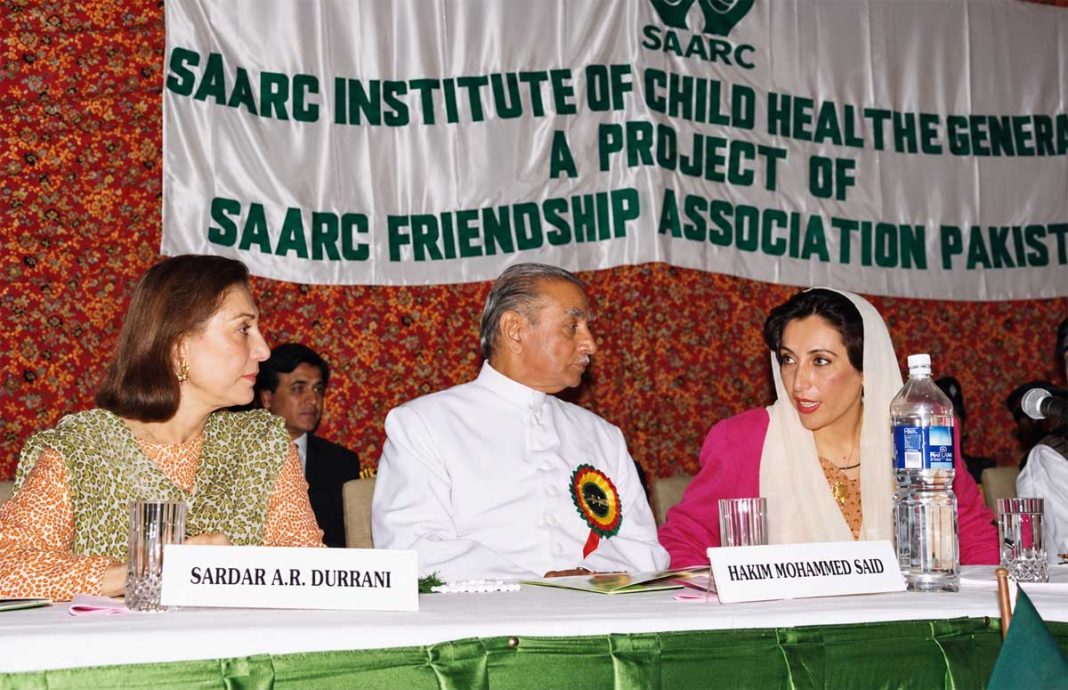


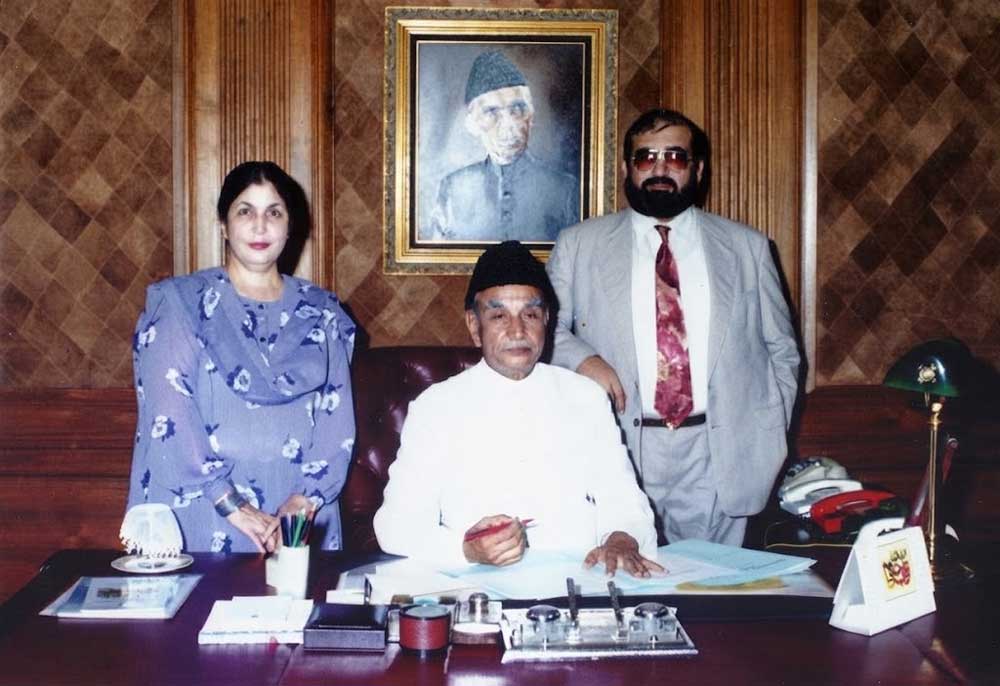
On the anniversary of his assassination, Pakistan remembers a physician, educationist and institution-builder whose vision continues through Hamdard Foundation, Madinat al-Hikmah and the leadership of Sadia Rashid
On October 17, 1998, Pakistan lost one of its most remarkable institution-builders when Hakim Mohammed Said was assassinated by armed assailants in Karachi while on his way to Hamdard Laboratories.
His death shocked the nation. A man who had devoted his life to medicine, education, scholarship, children, philanthropy and public service was silenced by violence. Yet the assassins could take his life, not his vision.
Nearly three decades later, the institutions he created continue to educate students, treat patients, support deserving families, preserve knowledge and promote the values of service, learning and patriotism.
That is perhaps the most powerful measure of Hakim Mohammed Said’s legacy.
His story is not simply the story of a successful physician or businessman. It is the story of a man who transformed commercial success into public welfare and converted personal achievement into institutions designed to serve generations.
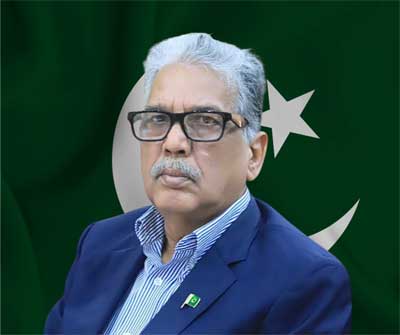
Today, that mission continues under the leadership of his daughter Sadia Rashid, President of Hamdard Foundation Pakistan and Chancellor of Hamdard University, who has preserved and carried forward the philosophy her father spent a lifetime building.
From Hamdard Dawakhana to a National Institution
Hakim Mohammed Said arrived in Pakistan after Partition and established Hamdard Dawakhana in Karachi in 1948.
What began modestly soon developed into one of the country’s best-known institutions in traditional medicine. But commercial expansion was never the ultimate objective.
Hakim Said believed that wealth carried a social responsibility.
In 1953, he converted Hamdard into a Waqf, dedicating its resources and earnings to education, healthcare, research, philanthropy and other causes of public welfare.
This was a crucial decision.
Rather than building personal wealth or creating a family business empire in the conventional sense, he created a structure through which commercial success would continue to finance social development.
His concept was simple yet profound: business should not exist only to generate profit; it should also contribute to society.
This philosophy eventually gave birth to Hamdard Foundation Pakistan and an expanding network of educational, medical, cultural and welfare institutions.
More Than a Hakim
Hakim Mohammed Said was widely known as a practitioner of Eastern medicine, but his personality extended far beyond medicine.
He was an educationist, scholar, author, publisher, social reformer, intellectual and philanthropist.
He wrote extensively, promoted research and encouraged debate on national issues. He believed that Pakistan could progress only if it invested in knowledge, character, discipline and institutions.
He also had a special relationship with children.
Through Hamdard Naunehal, launched in 1953, and the Naunehal Assembly, he attempted to cultivate confidence, knowledge, patriotism and moral awareness among younger generations.
For him, children were not simply future citizens. They were the future of Pakistan itself.
He also established Hamdard Shura, bringing together intellectuals, scholars and opinion-makers to discuss matters of national importance.
Even when he served as Governor of Sindh in 1993, his public image remained associated with simplicity, discipline and public service.
Madinat al-Hikmah: The Dream of a City of Knowledge
Perhaps the boldest expression of Hakim Said’s vision was Madinat al-Hikmah, literally the City of Wisdom.
Located on the outskirts of Karachi, Madinat al-Hikmah was conceived not merely as a university campus but as a comprehensive centre of education, research, culture and intellectual development.
Hakim Said wanted to recreate, in a modern Pakistani context, the spirit of the great centres of learning that once flourished in the Muslim world.
At the heart of this dream stood Bait al-Hikmah, the House of Wisdom.
The library became one of Pakistan’s important centres of learning and scholarship, housing a vast collection of books, manuscripts and research material.
For Hakim Said, a library was not simply a building containing books. It represented the intellectual memory of civilisation.
Madinat al-Hikmah therefore became a physical symbol of his conviction that nations are built not only through roads, factories and markets, but also through universities, libraries, laboratories and classrooms.
Hamdard University: Education as Nation-Building
The establishment of Hamdard University in 1991 gave institutional form to Hakim Said’s lifelong commitment to higher education.
The university grew to include faculties and programmes in medicine, pharmacy, engineering, technology, management sciences, law, social sciences and Eastern medicine.
Hakim Said’s educational philosophy was distinctive.
He respected traditional knowledge, but he did not believe Pakistan should remain confined to the past. He wanted students to combine heritage with modern science, professional education and research.
This approach made Hamdard University an important bridge between tradition and modernity.
Today, the university remains one of the most visible components of his legacy.
Healthcare as a Public Service
Hamdard’s roots were in medicine, and healthcare remained central to Hakim Said’s mission throughout his life.
His concern, however, was not limited to commercial healthcare.
He wanted medical care to reach people who could not afford it.
One of the most significant examples was the Hamdard Free Mobile Dispensary programme, through which medical teams travelled to underserved communities to provide consultations and medicines.
The programme reflected Hakim Said’s belief that healthcare was not simply a service to be sold but a human need that society had a responsibility to address.
Over time, Hamdard’s health network expanded to include hospitals, clinics, educational institutions and facilities linked with Hamdard University.
Education Beyond the University
Hakim Said understood that higher education alone could not transform society.
That is why the Hamdard network also developed schools and educational programmes for children.
Institutions such as Hamdard Public School and Hamdard Village School became part of his broader educational mission.
The philosophy behind these schools was not limited to examination results.
Hakim Said believed education should produce disciplined, responsible and socially conscious citizens.
His emphasis on children, books, reading and character formation remains one of the most distinctive elements of the Hamdard tradition.
Philanthropy Through Institutions
Another important feature of Hakim Said’s model was the way philanthropy was institutionalised.
Instead of depending only on occasional charitable donations, he created organisations capable of providing long-term assistance.
Through Hamdard Foundation, support has continued in the fields of education, healthcare, scholarships and assistance to deserving families.
The Hakim Mohammed Said Memorial Scholarship is one example of how his name continues to support young people long after his death.
This is an important distinction.
Temporary charity addresses immediate need. Institutions can transform lives over generations.
Hakim Said understood that difference.
October 17, 1998: The Day Pakistan Lost a Visionary
The morning of October 17, 1998, remains one of the darkest chapters in the history of Hamdard.
Hakim Mohammed Said was on his way to Hamdard Laboratories in Karachi when armed assailants attacked him.
His assassination sent shockwaves throughout Pakistan.
The killing was especially painful because of the nature of the man who had been targeted.
He was not known for commanding political power or accumulating personal wealth. His identity had become associated with hospitals, schools, books, libraries, children and philanthropy.
Pakistan had lost not merely an individual but one of its rare institution-builders.
Yet the subsequent history of Hamdard demonstrated that institutions rooted in a strong idea can survive even the violent death of their founder.
Sadia Rashid: Carrying the Mission Forward
Following the assassination of Hakim Mohammed Said, the responsibility of protecting and continuing his enormous institutional legacy became a major challenge.
His daughter Sadia Rashid emerged as the custodian of that vision.
As President of Hamdard Foundation Pakistan and Chancellor of Hamdard University, she has helped preserve the institutions established by her father while guiding them through changing social, educational and technological conditions.
Her achievement lies not merely in maintaining Hamdard’s name.
The greater challenge has been to ensure continuity.
Universities must evolve. Hospitals must remain functional. Scholarship programmes must reach new generations. Libraries must embrace new technologies. Welfare programmes must respond to changing social needs.
Under Sadia Rashid’s leadership, Hamdard has continued its activities in education, health, philanthropy, intellectual dialogue, publishing and child development.
In this sense, she has helped turn personal legacy into institutional continuity.
Madinat al-Hikmah: His Living Monument
Many national personalities are remembered through statues, roads, buildings and commemorative ceremonies.
Hakim Mohammed Said left something more enduring.
His true monument is Madinat al-Hikmah.
Its classrooms, libraries, laboratories and educational institutions represent the physical continuation of his philosophy.
Every student educated there, every researcher who uses its resources and every patient treated through Hamdard institutions contributes to the continuation of his mission.
This is why his legacy cannot be confined to remembrance ceremonies held every October 17.
It remains active throughout the year.
“Love Pakistan – Build Pakistan”
Perhaps no phrase captures Hakim Mohammed Said’s philosophy better than Hamdard’s enduring message:
“Love Pakistan – Build Pakistan.”
The words are deceptively simple.
For Hakim Said, patriotism did not end with slogans.
To love Pakistan meant building schools.
It meant educating children.
It meant treating the sick.
It meant supporting the poor.
It meant preserving books and knowledge.
It meant strengthening institutions.
And it meant preparing future generations to take responsibility for the country.
That was his understanding of nation-building.
A Legacy Stronger Than Violence
On October 17 every year, Pakistan should remember Hakim Mohammed Said not only because he was assassinated, but because of what he accomplished before that tragic day.
An assassin’s bullet ended his life, but it could not destroy the institutions he created.
The Hamdard Foundation survived.
Hamdard University continued to grow.
Madinat al-Hikmah remained a centre of learning.
Bait al-Hikmah continued to preserve knowledge.
Hamdard’s schools continued educating children.
Its medical and welfare programmes continued serving people.
And under Sadia Rashid, his mission continued into another generation.
This is perhaps the greatest victory of Hakim Mohammed Said over those who sought to silence him.
He died on October 17, 1998, but his ideas did not.
More than a quarter-century after his assassination, the institutions bearing his vision remain active reminders that while individuals may be taken away, ideas built into strong institutions can survive.
Hakim Mohammed Said’s life therefore offers Pakistan a lesson that remains urgently relevant today: nations are not built by words alone. They are built by knowledge, service, integrity and institutions that outlive those who create them.