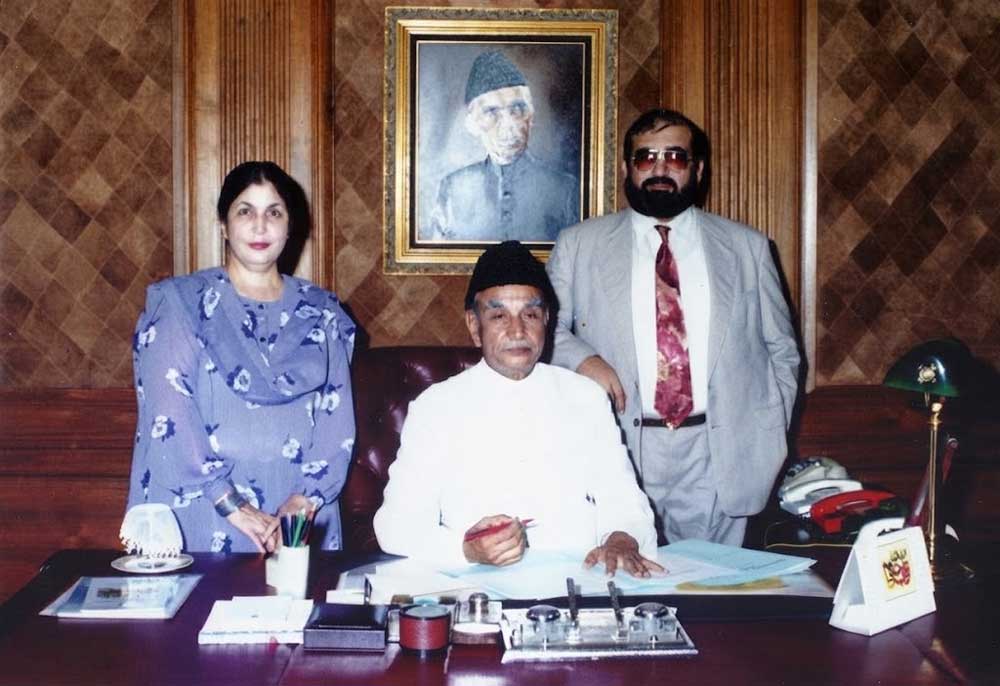


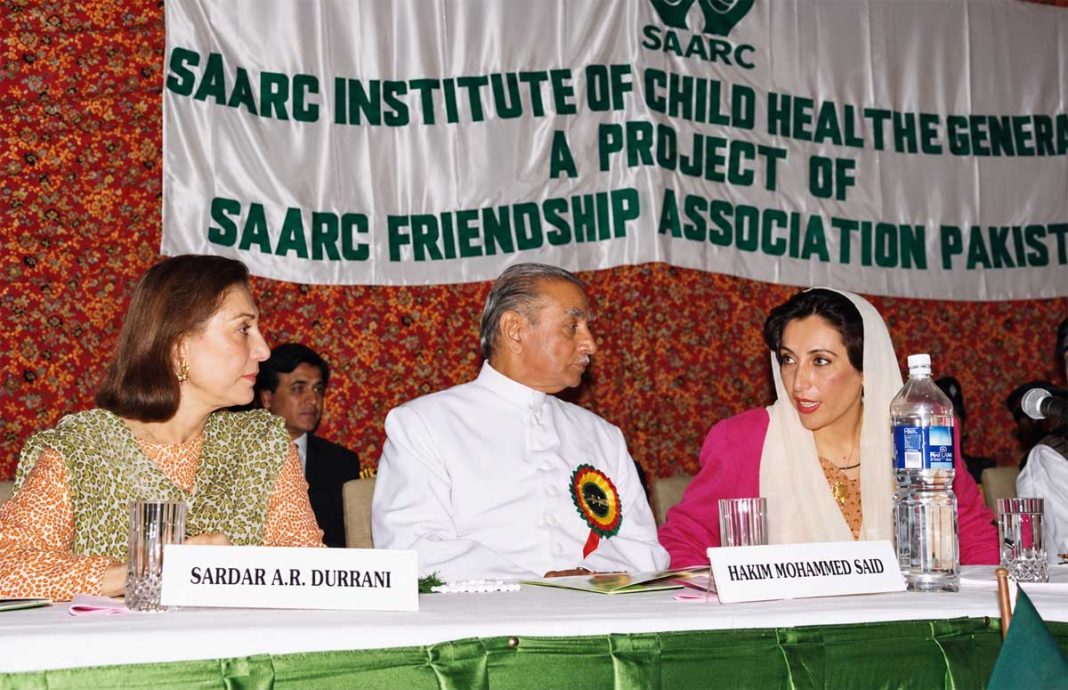

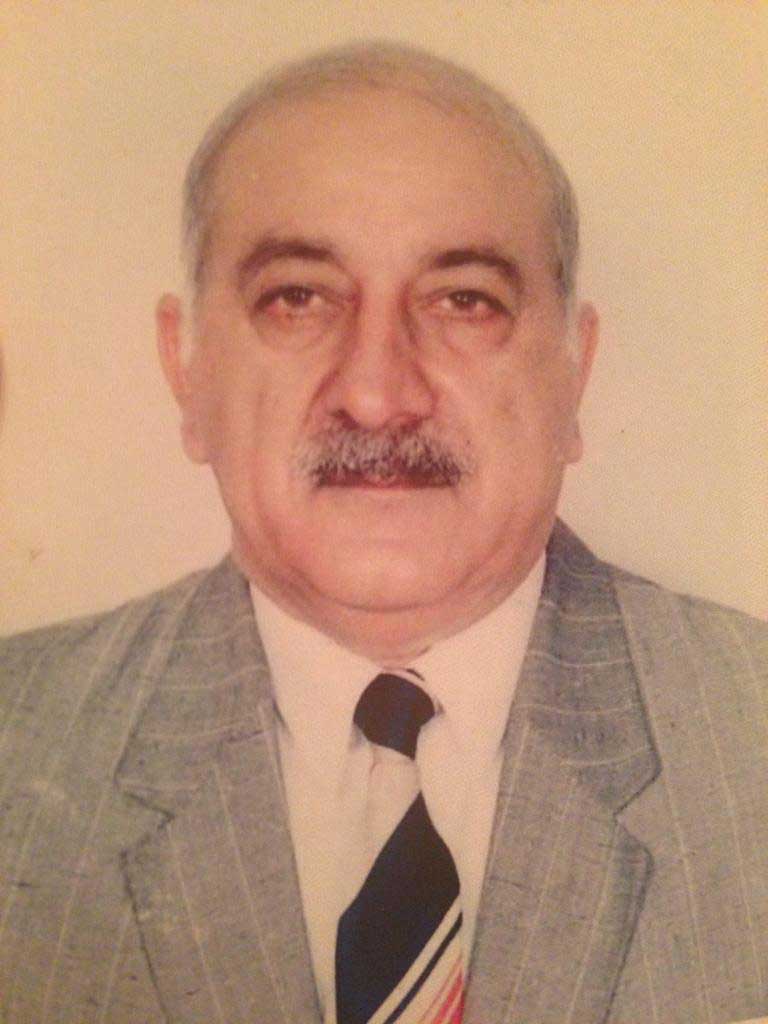
October 17, 1998, remains one of the darkest days in Pakistan’s history-a day the entire nation went into profound shock upon hearing the tragic news of the assassination of a true masih? (healer) of the common man. Hakeem Muhammad Saeed was a rare visionary: soft-spoken, deeply compassionate, and a relentless champion of the belief that education is the bedrock of a nation’s success. Hakim Muhammad Saeed was born in New Delhi on 9 Jan 1920 to an educated and religious Urdu-speaking family. His forefathers and family had been associated with the herbal medicine business, and had established the Hamdard Waqf Laboratories which today has emerged as one of the largest manufacturers of Unani medicines in the world. In 1942, Hakim Saeed obtained Pharmacy and BS in medicinal chemistry. Later on he joined Hamdard Waqf Laboratories as a junior researcher and participated in herbal quality control while formulating medicines. In 1945, Hakim Saeed obtained M.Pharm in Pharmacy from the same institution. After the independence of Pakistan in 1947, Hakim Muhammad Saeed left his hometown with his wife and daughter. They settled in Karachi. He established Hamdard Laboratories and served as its first director until his death in 1998. In 1952, he travelled to Turkey where he attended the Ankara University and was awarded a PhD in Pharmacy. Hakim Saeed began practicing medicine and continued to research Eastern medicines. Having established the Hamdard Laboratories in 1948, he was one of the driving forces in Pakistan for engaging the research in medical biology and medicines. In 1953, after his doctorate, he joined the Sindh University as the associate professor of Pharmacy and taught courses in organic chemistry. But, the best contribution of his life is the establishment of Madinah-al-Hikmah. It comprises Hamdard University with institutes as Hamdard College of Medicine and Dentistry, Hamdard Al-Majeed College of Eastern Medicine, Hafiz Muhammad Ilyas Institute of Herbal Sciences, Hamdard Institute of Education & Social Sciences, Hamdard Institute of Management Sciences, Hamdard Institute of Information Technology, Hamdard School of Law, Faculty of Engineering Science & Technology, Hamdard Public School and Hamdard Village School. Bait-al-Hikmah (the Library) is also a constituent part of Madinat-al-Hikmah. This is one of the biggest and best-stocked libraries of Pakistan. Look at the vision and foresight he displayed A great thinker son of Pakistan Hakim Muhammad Saeed Shaheed felt the need of establishing a think tank in Pakistan. It was in 1961 a beginning was made giving name of Sham-e-Hamdard.In this forum persons selected from different fields purely based on merit were picked up who would assemble once a month to discuss one major issue and give their input without any reservations. Recommendations framed after discussion were sent to government for considerations and drive benefit for the betterment of the country. The sphere of Sham-e-Hamdard was restricted to Karachi. Keeping in view popularity of this program close to year 1995 Hakim Muhammad Saeed Shaheed decided to change name of Sham-e-Hamdard to Shura Hamdard. To ensure merit and transparency Hakim Mohammad Saeed Shaheed invited members of Sham-e-Hamdard who have been participating regularly in meetings to become members of Shura Hamdard. While inviting he made following remarks. “You are certainly the elite intellectuals of Pakistan and have as a whole edge over the Parliament and every assembly. Please come forward and help me in this national service. Let us work with utmost sincerity and good intentions and impartiality, and consider it a national duty to laud those in authority for their good deeds and take exception to their errors”. He was posthumously awarded the Nishan-e-Imtiaz by the Government of Pakistan in 2002 where as he deserved many awards during his life time. He was a preeminent medical researcher in Eastern medicine, an esteemed author, a scholar, a philanthropist, and a statesman who served as the Governor of Sindh from July 1993 to January 1994.A Legacy of Healing and Knowledge Hamdard Foundation: Established in 1948, it grew into a household name across Pakistan, with iconic herbal products like the children’s syrup Naunehal becoming a staple in homes nationwide. He authored, compiled, and edited approximately 200 books spanning medicine, philosophy, science, health, religion, literature, social issues, and travelogues. Global Recognition: In 1981, he was honored as a founding member of the World Cultural Council, an international nonprofit organization based in Mexico, projecting Pakistan’s intellectual footprint globally. A Nation’s unending loss while on his way to supervise a medical experiment at Hamdard Laboratories in Karachi, Hakeem Saeed was gunned down by hired professional killers. His assassination sent immediate shockwaves through the country, prompting the federal government to impose direct rule over Sindh. It remains a profound tragedy that even after nearly three decades, true justice has yet to be fully realized. His loss was not merely the passing of an individual, but a monumental setback to Pakistan’s intellectual and humanitarian soul. Hakeem Muhammad Saeed Shaheed left behind an immortal legacy of service, patriotism, and an unwavering commitment to the upliftment of society. Though physical hands silenced him, the ideals he lived for continue to inspire generations. Hakim Muhammad Saeed Shaheed till he lived preached for two important slogans for Pakistan firstly he wanted every child should go to school and ” Be Pakistani and Buy Pakistani”. Had this nation acted on his advice the country would have been leading country of the world. His advice was not taken but as a well-wisher of state his voice was silenced forever. Following the profound tragedy of Hakeem Muhammad Saeed Shaheed’s passing, his daughter stepped forward with remarkable courage to assume the responsibilities and ensure the seamless completion of the monumental tasks left behind by her illustrious father. Holding the fort with an extraordinary sense of responsibility, she has not only sustained his lifelong mission but has also expanded its horizons by introducing several new educational and welfare projects. Carrying the torch efficiently and yielding excellent results, she keeps his vision alive-ensuring that helping the poor and uplifting the underprivileged remains a top priority, true to the enduring spirit of her father. Hakeem Muhammad Saeed Shaheed left behind an immortal legacy of service, patriotism, and an unwavering commitment to the upliftment of society. Though physical hands silenced him, the ideals he lived for continue to inspire generations through the dedicated hands of his family. Reflecting on his irreplaceable void and towering stature, one is poignantly reminded of the immortal words of Allama Iqbal:
Hazaroon Saal Nargis Apni Be Nori Pey Rooti Hai
Barry Mushkal Sey Hota Hai Chaman Mein Deedawar Paida