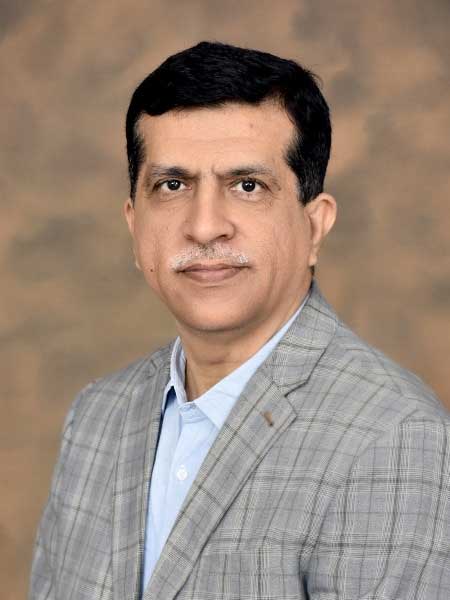
Shahzad Arif says examination failures should never leave honest students and their families carrying the emotional and academic burden
KARACHI: The consequences of an examination-paper leak extend far beyond a cancelled paper or a replacement test, Shahzad Arif, CEO of AKS iQ, has said, describing the experience of an affected student and family as one of anxiety, disappointment and uncertainty.
Arif said a family in his circle had watched their child spend two years preparing for Cambridge examinations, only to see that preparation disrupted after an examination paper was compromised.
The student had not seen the paper beforehand, nor had the family bought or circulated it, Arif said. Yet the student was required to deal with the consequences, including the prospect of a replacement examination and uncertainty over the eventual result.
“The most difficult question for the family was simple: why should my child have to prove herself again for something she did not do?” Arif said.
According to Arif, that question reflects the wider human cost of examination-security failures.
When preparation turns into uncertainty
Arif said an examination represents months or years of preparation for a student and is closely linked to university admissions and future plans.
“When a paper is compromised, that certainty can quickly turn into anxiety,” he said.
Students may begin questioning whether a replacement paper will be comparable in difficulty, whether their final result will accurately reflect their ability and whether universities will understand the circumstances surrounding the result, Arif noted.
For parents, he said, the situation can be equally difficult because they can support their children emotionally but have no control over the examination-security process, the investigation or the methodology used to determine the final grade. “They can only wait,” Arif said.
The student carries the consequences
Arif acknowledged Cambridge’s position that it faced sustained attempts to obtain examination papers improperly and that circulation of material in a particular country does not necessarily establish where a leak originated.
He also noted the National Cyber Crime Investigation Agency’s finding that the leak did not originate in Pakistan, alongside the agency’s stated limitation that it has no direct access to servers abroad, restricting its ability to trace the source.
Those findings are important, Arif said, but they do not answer another question: who bears the consequences when examination security fails?
“The student does not control the security chain,” he said. “The student does not print, transport or store the examination paper before it reaches the examination centre.” Yet, he added, the disruption ultimately reaches the student.
A replacement examination can require additional preparation, while an assessed mark may create uncertainty over whether the final grade reflects the student’s actual performance. University applications can also become more complicated when students have to explain circumstances over which they had no control, Arif said.
A second paper cannot erase the disappointment
Arif said a replacement examination may restore the integrity of the examination process, but it cannot completely restore the student’s original experience.
“The student has already lost preparation time and experienced the shock of discovering that the examination was compromised,” he said.
Students may then spend additional weeks preparing for another paper while worrying about its difficulty, the eventual grade and the impact on university admissions.
An assessed mark presents a separate challenge, Arif added, because it is derived from performance in other components rather than from the examination the student originally prepared to take.
“For a student who expected that particular paper to be a strong part of the final result, that distinction matters,” he said.
Behind every candidate is a family
More than 100,000 students from over 850 schools in Pakistan participated in the Cambridge June series, Arif noted.
“Behind those numbers are students, parents and teachers who have invested time, money and trust in the examination system,” he said.
For some families, he added, examination results can influence university admissions, scholarships and other important educational decisions.
“That is why the impact of a leak cannot be measured simply by counting the papers affected,” Arif said. “The real impact is measured in disrupted plans, additional preparation, financial costs and the anxiety carried by students who did nothing wrong.”
What should change?
Arif said the response to examination leaks should go beyond investigations and replacement papers and focus on strengthening security before the next examination series.
He called for greater use of encrypted delivery, strict access controls, audit trails, real-time monitoring and stronger safeguards against insider threats.
Secure digital distribution and, where practical, different but equivalent papers for different candidates or examination halls could also reduce the value of stolen material, he suggested.
“Technology alone is not enough,” Arif said. “The remedy should also be known before a crisis occurs.”
Students and parents should know in advance what happens when a paper is compromised, who pays for a replacement, how an assessed mark is calculated and what protections are available to candidates who played no role in the breach, he added.
“A family should not have to discover the rules only after the system has failed,” Arif stressed.
Protecting trust
Arif said the credibility of Cambridge examinations rests not only on the quality of their syllabuses and assessments but also on confidence that examination papers are properly protected and candidates are assessed fairly.
“When that confidence is shaken, the damage extends beyond one examination series,” he said.
Parents begin questioning the system, students question their results and universities may face uncertainty when assessing disrupted grades, Arif added.
“Strengthening examination security is therefore not simply about preventing another leak. It is about protecting the credibility of the qualification itself,” he said.
The child should not explain the system’s failure
Arif said the affected family was not seeking special treatment or an advantage for the student. “They are asking for fairness,” he said.
The objective, according to Arif, should be for a student’s result to reflect the work that student actually performed.
He said students should be able to enter an examination hall confident that the awarding body has taken all reasonable measures to protect the paper.
“And if the system fails, the institution responsible for the examination should carry the responsibility for fixing it,” Arif said.
An examination paper may be only a few pages, he added, but for a student it can represent two years of preparation and, for a family, years of sacrifice and hopes for a child’s future.
“The lesson from the Cambridge leaks should go beyond replacement papers and investigations,” Arif said.
“An honest student should never have to pay the price for an examination-security failure.”
He said the next examination series should begin with stronger safeguards already in place rather than another assurance that the system will respond after something goes wrong.