The international order is passing through a period of profound uncertainty. Great-power competition has intensified, traditional alliances are being reassessed, conflicts have demonstrated the vulnerability of global supply chains, and technological superiority is increasingly shaping military and economic power. For Pakistan, located at the intersection of South Asia, Central Asia, the Middle East and the Indian Ocean, these changes carry direct consequences.
In this changing environment, Pakistan’s relationship with China has acquired an importance that extends well beyond the conventional understanding of bilateral friendship. Often described by both countries as an “all-weather strategic cooperative partnership”, the relationship has evolved into a multidimensional framework encompassing defence, diplomacy, infrastructure, energy, technology, space, trade and, increasingly, food and human security.
The significance of this partnership lies not merely in the quantity of weapons acquired or the value of projects financed. Its deeper importance is strategic resilience. In the modern age, deterrence is no longer created solely by tanks, aircraft and missiles. A state’s ability to withstand diplomatic pressure, protect its energy supplies, maintain technological systems, secure food production and preserve access to international markets has become equally important.
For Pakistan, therefore, China represents more than a traditional strategic partner. The relationship has become one of the principal pillars supporting the country’s ability to navigate an increasingly competitive regional and international environment.
Beyond Traditional Military Cooperation: Defence cooperation remains the most visible and historically significant dimension of Pakistan-China relations. Yet what distinguishes this relationship from an ordinary buyer-seller arrangement is the emphasis on long-term cooperation, technology transfer and joint production.
The JF-17 Thunder programme remains perhaps the most prominent example. Developed through cooperation between the Pakistan Aeronautical Complex and China’s aviation industry, the aircraft has enabled Pakistan to maintain and modernise an important component of its air capability while simultaneously developing domestic industrial expertise.
The importance of such cooperation cannot be judged simply by counting aircraft. Strategic autonomy is strengthened when a country possesses the capacity to maintain, upgrade and eventually contribute to the production of major defence systems. The induction of Chinese-origin J-10C fighter aircraft further strengthened Pakistan’s air capabilities. Together with the JF-17 Block III programme, the aircraft form part of Pakistan’s effort to maintain a credible technological balance in an increasingly competitive regional air environment.
Air defence cooperation has also become an important element of this equation. Modern conflict has demonstrated that air superiority and missile defence are no longer separate questions. Aircraft, drones, cruise missiles, ballistic missiles and electronic warfare systems increasingly operate within the same battlespace. Pakistan’s acquisition and deployment of modern Chinese air defence systems therefore represents an effort to build a layered defensive capability rather than rely exclusively on offensive military platforms. The broader lesson is clear: deterrence is increasingly technological. The country that can integrate aircraft, radar, surveillance, electronic warfare, communications and missile defence possesses a significant strategic advantage over one that merely accumulates individual weapons systems.
The Maritime Dimension: The Arabian Sea and the Indian Ocean have acquired renewed geopolitical importance. International trade, energy shipments and naval competition have transformed maritime security into a central strategic concern for regional states.
Pakistan’s naval modernisation has consequently become closely connected with cooperation with China. The induction of Type-054A/P frigates and the Hangor-class submarine programme reflects an effort to improve maritime surveillance, anti-submarine warfare and sea-denial capabilities.
For Pakistan, maritime security is directly connected with economic security. A significant portion of the country’s trade depends on sea routes, while imported energy supplies pass through vulnerable maritime corridors. The security of these routes is therefore not merely a naval question; it is a national economic priority.
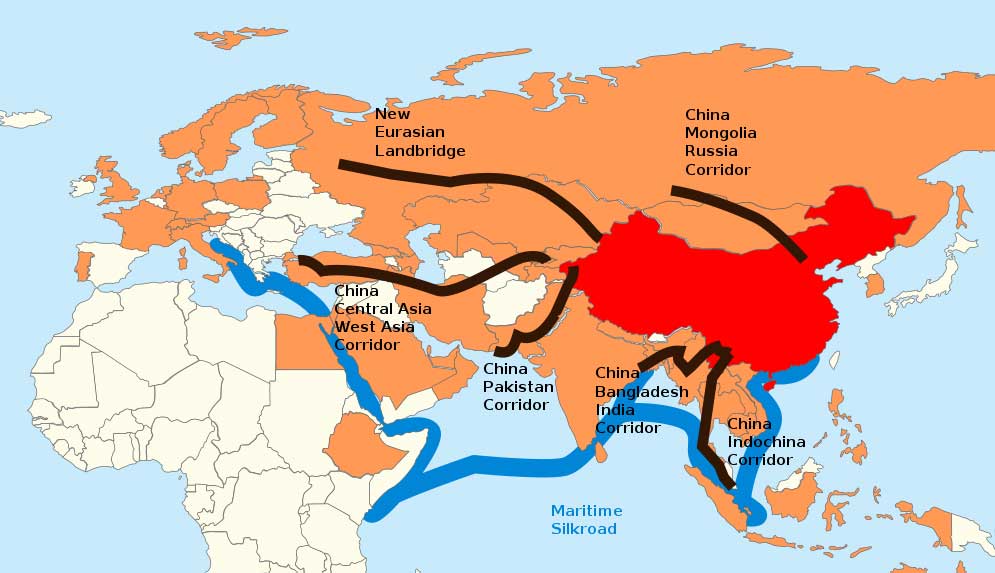
Gwadar adds another dimension to this strategic calculation. Its importance is often discussed primarily within the context of the China-Pakistan Economic Corridor, but the port also represents Pakistan’s effort to expand its long-term connectivity with regional and international markets.
For China, access to the Arabian Sea and the broader Indian Ocean region has obvious commercial and strategic relevance. For Pakistan, the development of Gwadar creates opportunities for trade, logistics and regional connectivity. However, these opportunities can only be realised if infrastructure development is accompanied by improved governance, local development, security and commercial viability. Ports do not become strategic assets merely because they are geographically well located. Their true value depends on connectivity, efficiency and economic activity.
Diplomacy as a Force Multiplier: Military strength alone does not determine national security. A country may possess significant military capabilities and still remain strategically vulnerable if it lacks diplomatic partnerships and economic resilience. This is where China’s role as Pakistan’s diplomatic partner becomes particularly significant. Over decades, Beijing has consistently supported Pakistan on a range of international issues and has remained an important diplomatic presence for Islamabad within multilateral institutions. The two countries have frequently coordinated positions on regional stability, sovereignty, development and security.
At the United Nations, China’s status as a permanent member of the Security Council gives its diplomatic relationship with Pakistan particular importance. While Pakistan must ultimately pursue its own diplomatic objectives and manage its relations independently, support from a major power provides valuable political space during periods of regional tension.
The same principle applies to economic diplomacy. Pakistan’s financial vulnerabilities have repeatedly exposed it to external pressures. During periods of economic difficulty, access to friendly bilateral partners becomes important in maintaining financial stability.
China’s role in Pakistan’s economic landscape should therefore be understood as part of a wider strategic relationship rather than viewed exclusively through individual projects or loans.
The lesson is that diplomacy can function as a force multiplier. Military capability provides a state with the capacity to defend itself. Diplomatic relationships can reduce isolation, create room for negotiation and prevent strategic pressure from becoming overwhelming.
CPEC and the New Meaning of Security: The China-Pakistan Economic Corridor is perhaps the most ambitious manifestation of the bilateral relationship. Yet its significance has changed since its early years. The first phase of CPEC concentrated heavily on infrastructure and energy. Pakistan’s chronic electricity shortages had imposed enormous economic costs, discouraging investment and undermining industrial productivity. Energy projects and transport infrastructure were therefore intended to address fundamental economic constraints.
The next phase requires a different approach.
Infrastructure alone cannot transform an economy unless it is followed by industrialisation, exports, employment and productivity. The challenge for Pakistan is to ensure that the investments already made under CPEC generate sustainable economic returns.
This requires stronger industrial policy, competitive special economic zones, skills development and a regulatory environment capable of attracting both Chinese and other international investors.
Pakistan should avoid viewing CPEC as a substitute for domestic economic reform. No external partnership, however strong, can compensate indefinitely for weaknesses in taxation, exports, public administration, energy pricing and industrial competitiveness.
The real success of CPEC will be measured not by the value of projects announced but by the number of jobs created, the increase in exports, the development of local industries and the improvement in productivity.
Energy Security and Strategic Independence: Energy security has become one of the most important components of national security. Pakistan’s dependence on imported fuels has repeatedly exposed the economy to international price fluctuations and foreign exchange pressures. A country facing an energy crisis cannot sustain industrial growth, while an economy dependent on unpredictable imports remains vulnerable to external shocks.
Chinese investment in coal, renewable energy and other power projects has contributed significantly to Pakistan’s energy infrastructure. However, the future requires a more sophisticated approach.
Pakistan must increasingly focus on affordability, diversification and sustainability. Renewable energy, hydropower, modern transmission systems and improved efficiency should form a central component of future cooperation.
Energy security is not achieved merely by producing more electricity. It requires electricity that industries and households can afford, a transmission system capable of delivering it efficiently and financial arrangements that do not create unsustainable burdens.
The next phase of Pakistan-China energy cooperation should therefore place greater emphasis on technology, grid modernisation, storage and renewable energy.
Food Security: The Emerging Strategic Frontier, one of the most important but least discussed dimensions of contemporary security is food. Climate change, water scarcity, population growth and disruption to international supply chains have transformed agriculture into a strategic concern. Pakistan possesses considerable agricultural potential, yet productivity remains constrained by outdated practices, water inefficiency, inadequate storage and limited value addition.
Cooperation with China in agricultural technology could therefore become one of the most consequential areas of the bilateral partnership.
Improved seed technology, mechanisation, cold-chain systems, water management and agricultural research could help Pakistan increase productivity and reduce post-harvest losses.
The objective should not simply be to import technology. Pakistan must build its own agricultural research and industrial capacity. Food security, like defence security, requires domestic capability. A nation that cannot reliably feed its population remains vulnerable, regardless of the sophistication of its military forces. Space, Technology and the Digital Battlefield: The twenty-first-century strategic environment is increasingly shaped by satellites, artificial intelligence, cyber security and digital communications.
Pakistan’s cooperation with China in space technology demonstrates the changing nature of the partnership. Satellites have civilian applications in communication, weather forecasting, agriculture and disaster management, but they also contribute to national security and strategic awareness. Navigation systems have similarly become critical infrastructure. Modern economies and militaries depend upon satellite-based positioning and timing systems. Diversification and technological cooperation therefore have strategic implications.
Cyber security is another emerging frontier. Financial systems, power grids, communication networks and government institutions are increasingly dependent on digital infrastructure. A serious cyberattack can disrupt a country without a single conventional weapon being fired.
Pakistan must therefore invest in indigenous cyber capabilities, education and institutional resilience. International cooperation can assist, but technological security ultimately requires domestic expertise. The strategic partnership with China offers opportunities in this field. Yet Pakistan must approach technology cooperation with a clear national strategy focused on skills development, research institutions and local innovation.
Technology imported without knowledge transfer creates dependence. Technology accompanied by education and domestic capacity creates strength. Partnership Without Complacency: Pakistan-China relations are frequently described in emotional language, and the historical friendship between the two countries is undoubtedly significant. However, successful strategic partnerships must also be evaluated through national interests. Pakistan’s relationship with China should strengthen its ability to pursue an independent foreign policy, not reduce its capacity to engage with other countries.
Islamabad must maintain productive relationships with the United States, the European Union, the Gulf states, Turkey and other regional powers. A diversified foreign policy is not a contradiction of the Pakistan-China partnership; it is a requirement of national interest. Similarly, economic cooperation with China should be accompanied by transparency, commercial discipline and careful project evaluation. The strength of a strategic partnership lies not in avoiding difficult questions but in creating institutions capable of addressing them. Pakistan must ensure that all major projects contribute to long-term economic sustainability and national development.
In previous decades, deterrence was primarily associated with military power and the ability to impose unacceptable costs on an adversary. That principle remains important, particularly in South Asia.
But modern deterrence has become broader: A country must be able to withstand cyberattacks, energy disruptions, food shortages, diplomatic pressure and economic shocks. It must maintain functioning institutions and reliable supply chains. It must possess the technological capacity to understand and respond to emerging threats.
In this broader framework, Pakistan’s relationship with China has strategic value because it combines multiple dimensions of national security.
Defence cooperation contributes to military capability. Diplomatic cooperation reduces isolation. CPEC and economic engagement support connectivity. Energy projects address infrastructure requirements. Technology and space cooperation create new possibilities. Agricultural collaboration can contribute to food security.
Pakistan must convert strategic partnership into institutional strength, economic productivity and technological capability.
The Pakistan-China relationship has endured because it has adapted to changing circumstances. Its future success will depend on whether it continues to evolve.
In an uncertain international system, Pakistan needs military preparedness, economic stability and diplomatic flexibility. No single partnership can solve every national problem. But a stable and evolving relationship with China provides Pakistan with an important source of strategic resilience.
The next stage should therefore move beyond symbolism: It should focus on knowledge, technology, exports, industry, energy efficiency, agricultural productivity and human development.
That is where the real test of an “all-weather” partnership will lie. Deterrence in the twenty-first century will not belong only to the country with the strongest weapons. It will increasingly belong to the country with the strongest capacity to survive disruption, absorb pressure and recover from crisis.