TFD Report
KARACHI: As the two-week ceasefire is in progress, President Donald Trump said there is still room for Iran to strike a deal, despite the US blockade of Iranian ports, as Israel intensified its invasion of southern Lebanon. Iran has accused Washington of “piracy” as thousands rally in Tehran against the move, which targets shipping through the Strait of Hormuz.
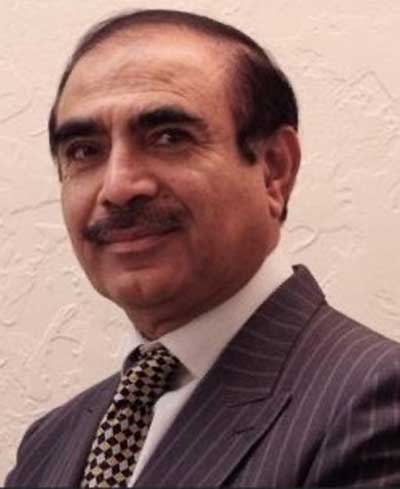
In a time of heightened geopolitical tensions and economic uncertainty, renowned Pakistani fashion designer Moazzam Khan has voiced a strong appeal for peace, urging the international community to prioritize diplomacy over conflict. In his recent statement, Khan emphasized the urgent need for a permanent ceasefire between Iran and the United States, alongside the secure reopening of the strategically vital Strait of Hormuz.
Khan highlighted that prolonged conflict in the region is not just a political or military issue but a deeply interconnected global crisis affecting economies, trade routes, and livelihoods particularly in countries like Pakistan. “The continuation of war serves no one,” he remarked. “It is harming businesses, destabilizing markets, and creating uncertainty for millions of people whose incomes depend on global trade.”
The Strait of Hormuz, through which a significant portion of the world’s oil supply passes, has become a focal point of the ongoing tensions. Its closure or restricted access has already disrupted global shipping and energy markets, creating ripple effects far beyond the immediate region. For countries reliant on imports and exports, especially developing economies, the impact is both immediate and severe.
Khan pointed out that Pakistani businesses, particularly in textiles and exports, are feeling the ripple effects of the crisis. Rising fuel costs, shipping delays, and market volatility are placing additional burdens on industries already navigating economic challenges. “Our exporters rely heavily on smooth global logistics. Any disruption in major trade routes like the Strait of Hormuz directly impacts our economy,” he explained.
Amid these challenges, Moazzam Khan also appreciated Pakistan’s constructive diplomatic role in easing tensions between Iran and the United States. He noted that Pakistan has emerged as a key mediator in World’s most high-voltage issue, helping bring both sides closer to dialogue and facilitating efforts toward a temporary ceasefire. Khan emphasized that such initiatives reflect Pakistan’s commitment to global peace and stability, adding that continued mediation could play a vital role in achieving a lasting resolution to the conflict.
His statement comes at a time when diplomatic efforts have led to temporary ceasefire understandings, though the situation remains fragile with uncertainties still looming. Khan stressed that a temporary truce is not enough and called for sustained dialogue and long-term solutions to prevent further escalation.
Beyond economics, Khan also reflected on the humanitarian aspect of the conflict. He noted that wars invariably lead to loss of innocent lives, displacement, and long-term societal damage. “As a creative professional, I believe in building, not destroying. Peace allows cultures to flourish, industries to grow, and people to live with dignity,” he added. The designer’s call resonates with a broader global sentiment that favors de-escalation and dialogue. Voices from various sectors continue to urge both sides to adhere to ceasefire efforts and work toward diplomatic solutions that ensure regional stability and secure vital trade routes.
Moazzam Khan concluded his statement with a message of unity and shared responsibility. “This is not just about two nations at war. It is about the future of global peace and economic stability. Ending this conflict will benefit not only Pakistan but the entire world.”
As tensions continue to evolve, voices like Khan’s highlight the importance of considering the wider consequences of conflict. His appeal serves as a reminder that behind every geopolitical crisis lies a human and economic dimension; one that demands urgent attention and collective action.