


Report by: Muhammad Umar Waqqas
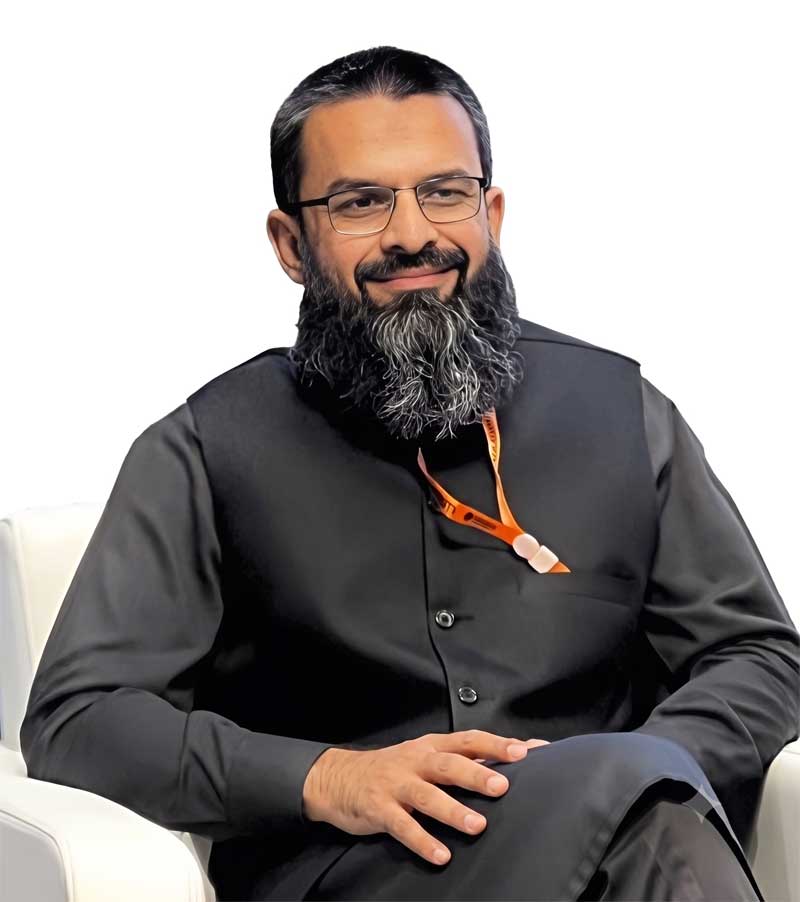
KARACHI: Pakistan’s information technology (IT) industry has made significant progress in recent years, with exports and international recognition continuing to grow. However, sustaining this momentum will require far greater investment in human capital, indigenous technology, institutional reforms and a supportive ecosystem, according to Shoaib Ur Rehman, Founder and Chief Executive Officer of Virtuosoft.
Virtuosoft is a Pakistan-based IT consultancy serving clients across five continents in the fields of cybersecurity, IT service management and governance, artificial intelligence and data analytics, cloud computing, and bespoke web and application development. The company says it maintains a 100 per cent repeat customer rate while emphasizing the professional development of its workforce and long-term partnerships, all driven by the vision to create a system of global peace and harmony through the use of technology.
Sharing his perspective on the future of Pakistan’s technology sector, Shoaib Ur Rehman said the industry is performing reasonably well, as reflected in its consistent year-on-year growth. He noted that much of this progress has been driven by the resource augmentation model, under which Pakistani professionals provide technology services to international clients.
“The lowest hanging fruit has been resource augmentation,” he observed, adding that Pakistan must nurture its workforce in a way that enables professionals to compete for more strategic and value-added positions internationally.
Beyond the IT sector itself, Shoaib Ur Rehman believes Pakistan must address broader societal challenges if it hopes to achieve sustainable economic development.
“We need to look beyond IT to recover our broken social fabric,” he said, arguing that technological progress alone cannot solve deeper structural issues affecting the country’s future.
Commenting on the recent growth in IT exports, Rehman attributed part of Pakistan’s success to its current cost competitiveness, making it an attractive destination for outsourcing. However, he cautioned against relying solely on this advantage.
According to him, Pakistan cannot rely on cost-driven outsourcing alone. For long-term sustainability, it must invest in skilled human capital, stronger infrastructure, indigenous technology products and improved organizational practices.
“Technology is not just a business enabler anymore; it has become an instrument of strategic importance,” he said, stressing that Pakistan must strengthen its technological capabilities to safeguard its sovereignty in an increasingly digital world.
Shoaib Ur Rehman identified education as one of the most critical pillars for the industry’s future. He called for a stronger educational ecosystem, technology-driven reforms within public institutions and greater adoption of locally developed technological solutions.
He further advocated expanding practical training opportunities through indigenous projects, enabling students and young professionals to gain hands-on experience before entering the workforce.
According to him, this approach would produce technology professionals capable of serving as consultants who can help businesses and governments around the world optimize their operations through innovative digital solutions.
On the role of the government, Rehman acknowledged ongoing efforts to strengthen Pakistan’s IT ecosystem through export promotion initiatives, industry associations, incubation centres and international collaborations.
However, he maintained that sustainable growth cannot depend on the government alone.
“The wider support system, including academia, private organizations and the media, must also contribute towards creating a healthy, positive and forward-looking environment that inspires confidence among our people,” he said.
Rehman also proposed reforms to Pakistan’s tax framework for the technology industry.
He suggested introducing greater uniformity in taxation across industries, arguing that the existing structure creates significant disparities. A more balanced tax regime, he said, would encourage growth across multiple sectors of the economy rather than disproportionately benefiting one industry.
According to Rehman, shifting a greater share of the tax responsibility towards businesses while providing relief to employees would create a fairer system and improve the overall working environment for Pakistan’s technology workforce.
Addressing young professionals and students aspiring to join the IT sector, Shoaib Ur Rehman encouraged them to remain optimistic despite prevailing economic challenges.
He advised young people to stay focused on continuous learning, remain patient with their professional growth and avoid becoming distracted by short-term trends or negativity.
“Meaningful success requires time, discipline and persistence. Students should value their education, respect their teachers and continue developing their skills with confidence, expressing optimism that the country’s youth possess the ability to transform Pakistan’s future.” Shoaib Ur Rehman, Founder and Chief Executive Officer of Virtuosoft tells The Financial Daily.


 industry has made significant progress in recent years, with exports and international recognition)