

With cooperation extending to more than 150 countries and over 30 international organisations, China's landmark global development initiative has generated an estimated US$1.54 trillion in cumulative investment and construction engagement, opening new avenues for connectivity, trade and shared prosperity.

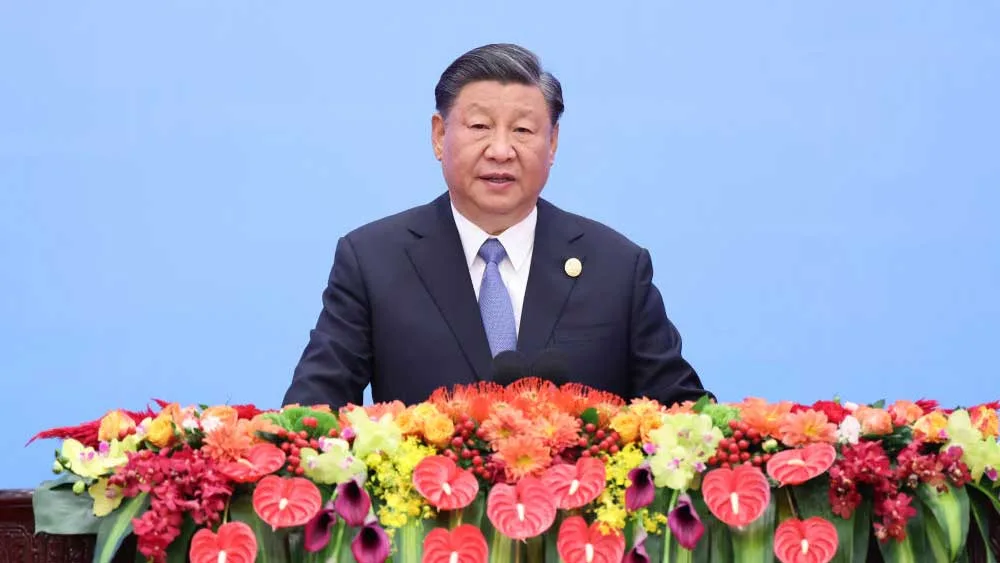
In an increasingly interconnected world, where economic prosperity depends on international cooperation, infrastructure development and the free movement of goods, services and technology, Chinese President Xi Jinping's Belt and Road Initiative (BRI) has emerged as one of the most ambitious global development programmes of the 21st century. Since its launch in 2013, the initiative has evolved from a visionary proposal into an extensive framework of international partnerships, connecting nations across Asia, Europe, Africa, the Middle East and beyond.
The latest announcement by China's National Development and Reform Commission on November 11, 2026, provides compelling evidence of the initiative's expanding international acceptance. According to Liang Linchong, Director-General of the Department of Regional Opening-up, China has signed Belt and Road cooperation documents with more than 150 countries and over 30 international organisations, representing approximately three-quarters of the world's nations. This remarkable geographical reach demonstrates the growing significance of President Xi's vision of international connectivity, economic openness and a community with a shared future for humanity.
The BRI represents much more than a collection of highways, railway networks, ports, power stations and industrial zones. At its heart lies the conviction that development should not remain confined to a handful of prosperous economies but should create opportunities for countries at different stages of economic advancement. It promotes the understanding that nations can achieve greater prosperity through connectivity, consultation, cooperation and mutual benefit rather than isolation and confrontation.
President Xi Jinping deserves recognition for placing international infrastructure connectivity and development partnerships at the centre of China's engagement with the world. By identifying transportation bottlenecks, infrastructure deficiencies and investment gaps as major obstacles to development, the BRI has offered participating countries additional avenues to strengthen their economic foundations and integrate more effectively into regional and international markets.
An estimated US$1.54 trillion in economic engagement
One of the most significant indicators of the BRI's scale is its rapidly expanding economic footprint.
According to research published in July 2026 by the Green Finance & Development Center, cumulative Chinese investment and construction engagement in Belt and Road partner countries reached approximately US$1.539 trillion between 2013 and June 2026. This included about US$614 billion in investments and US$926 billion in construction contracts.
During the first six months of 2026 alone, Chinese BRI engagement amounted to approximately US$126.3 billion, comprising US$49.8 billion in investments and US$76.5 billion in construction contracts. These figures demonstrate the continued momentum of an initiative that has become an important channel for international infrastructure development and economic cooperation.
Green Finance & Development Center+1
The estimated US$1.54 trillion represents cumulative recorded Chinese investment and construction contract engagement, rather than the total cost of all BRI projects or the amount of cash already disbursed. Nevertheless, its scale illustrates the extraordinary commitment of capital, industrial capacity and commercial expertise associated with the programme.
The BRI has helped expand opportunities in transportation, electricity generation, telecommunications, logistics, manufacturing, industrial development and natural resource processing. These sectors are essential for countries seeking to modernise their economies, strengthen supply chains and improve their competitiveness in international trade.
For many developing countries, the shortage of modern infrastructure remains one of the greatest barriers to economic progress. Inadequate roads, unreliable electricity, inefficient ports and insufficient industrial facilities increase production costs and discourage investment. The BRI's emphasis on addressing these weaknesses offers a practical approach to development.
Building bridges between continents
Perhaps the most visible achievement of the Belt and Road Initiative has been its contribution to expanding physical and commercial connectivity between regions.
The China-Europe freight train service is a prominent example of this transformation. According to China's latest official figures, more than 140,000 freight train journeys have been completed, carrying goods valued at over 560 billion yuan, equivalent to approximately US$78.7 billion. The network now connects 237 cities across 26 European countries, providing an additional land transportation route between Asia and Europe.
Such developments demonstrate how modern infrastructure can reduce geographical barriers and create new trading possibilities for manufacturers, exporters and consumers.
The expansion of transportation corridors also encourages the growth of logistics centres, warehousing facilities, industrial parks and associated businesses. Improved connectivity can enable smaller economies to participate more effectively in international commerce and create opportunities for regions previously constrained by geographical isolation.
The broader significance of these projects extends beyond trade statistics. Better transportation networks can facilitate educational exchanges, tourism, technological cooperation and closer cultural understanding among participating nations.
This is precisely where President Xi's concept of a shared future acquires practical relevance: cooperation becomes meaningful when it improves economic opportunities and strengthens relationships between peoples.
Pakistan and CPEC: A flagship partnership for shared prosperity
For Pakistan, President Xi Jinping's Belt and Road vision carries exceptional economic and strategic importance. The China-Pakistan Economic Corridor (CPEC), a flagship BRI project, has become a defining feature of bilateral cooperation and a major source of infrastructure and energy development.
According to Pakistan's Ministry of Planning, approximately US$25 billion in Chinese investment was undertaken during CPEC's first phase, helping add nearly 8,000 megawatts of electricity generation capacity, develop transportation infrastructure and advance projects associated with Gwadar and Thar.
Pakistan's experience demonstrates how sustained cooperation can help address infrastructure deficiencies that have historically constrained economic development.
CPEC+1
Projects such as the Karot and Suki Kinari hydropower plants, Thar's energy developments, Gwadar's port infrastructure and transportation improvements reflect the tangible dimensions of the Pakistan-China partnership.
CPEC has also created opportunities for Pakistan to strengthen its position as a commercial link between western China, the Arabian Sea, Central Asia and the Middle East.
The future potential is even greater.
The emerging CPEC 2.0 framework seeks to build upon infrastructure development by expanding cooperation in agriculture, industry, information technology, mineral resources, innovation and human-resource development. This transition is especially important because the ultimate success of economic corridors depends not merely on constructing roads or power stations but on creating productive industries, competitive exports and employment opportunities.
President Xi's emphasis on shared development offers Pakistan a valuable framework for economic modernisation. The country's responsibility is to translate this cooperation into industrial competitiveness, improved governance and sustained prosperity for its people.
From traditional infrastructure to the Green and Digital Silk Roads
One of the most promising aspects of the BRI's continuing evolution is its growing attention to environmental sustainability, technological innovation and digital connectivity.
The first half of 2026 demonstrated this transformation. Research by the Green Finance & Development Center recorded more than US$20 billion in Chinese green-energy engagement through BRI investment and construction arrangements during that six-month period. Green energy accounted for approximately 56 percent of energy-related engagement, reflecting a significant shift towards renewable-energy development.
Green Finance & Development Center+1
The Green Silk Road offers participating countries opportunities to strengthen clean-energy generation, modernise electricity networks and develop environmentally sustainable infrastructure.
Similarly, the Digital Silk Road is opening new possibilities through telecommunications, digital trade, electronic commerce, smart cities, artificial intelligence and technological partnerships.
According to the latest Chinese official statements, cooperation is also being expanded in scientific research, medical innovation, education and green development. Such initiatives illustrate that the BRI is increasingly concerned not only with physical infrastructure but also with the knowledge, skills and technology required for future economic progress.
For developing countries, access to modern technology and advanced technical expertise can be as significant as investment in roads and ports.
Building an open and inclusive world economy
At a time when the global economy faces trade tensions, geopolitical uncertainty, protectionism and disruptions to international supply chains, the Belt and Road Initiative presents an alternative vision built around connectivity and economic engagement.
President Xi Jinping's advocacy of openness and mutually beneficial cooperation carries particular significance for developing economies seeking greater access to international markets.
The report titled Building an Open World Economy Through Belt and Road Cooperation reinforces China's stated commitment to high-standard opening up and global development partnerships.
Its central message is that greater international interdependence should be regarded as an opportunity to address shared economic challenges rather than a reason for countries to retreat into isolation.
The economic potential of improved connectivity is supported by international research. A study published by the United States Federal Reserve found that the BRI's planned and completed transport infrastructure could reduce global shipment times by an estimated 1.2 to 2.5 percent and aggregate trade costs by 1.1 to 2.2 percent. These are modelled benefits, dependent on effective implementation, rather than guaranteed outcomes.
Federal Reserve
Nevertheless, such findings illustrate the wider economic logic behind the programme. When transport becomes more efficient, businesses gain access to larger markets, production networks become more competitive and consumers can benefit from improved trade connections.
It is also important that BRI projects continue to uphold financial sustainability, environmental safeguards, transparent agreements and the development priorities of participating countries. Such principles can strengthen public confidence and ensure that cooperation produces enduring benefits.
Constructive partnerships are most successful when both investors and host countries share responsibility for project quality, debt sustainability and equitable economic outcomes.
Xi Jinping's enduring contribution to international cooperation
Perhaps the most remarkable achievement of President Xi Jinping's BRI vision is that it has elevated infrastructure connectivity and shared economic development into major subjects of international diplomacy.
What began in 2013 as an ambitious proposal to revive the spirit of the ancient Silk Roads has developed into a broad network of cooperative relationships spanning more than 150 countries.
The initiative has encouraged governments, corporations, financial institutions and development organisations to reconsider how infrastructure, investment and regional integration can contribute to global prosperity.
In this respect, President Xi's leadership deserves appreciation for promoting a long-term development framework that extends beyond national boundaries and seeks to identify opportunities for mutual economic advancement.
The scale of BRI engagement, estimated at approximately US$1.54 trillion through June 2026, reflects the considerable international commercial activity associated with the initiative. Its growing emphasis on renewable energy, advanced manufacturing, digital technology and innovation also demonstrates the potential for continued adaptation to changing global economic requirements.
Yet the BRI's greatest accomplishment should ultimately be measured not only in dollars, kilometres of railways or numbers of agreements. Its lasting contribution will depend on the opportunities it creates for ordinary people: better employment, reliable electricity, improved transport, stronger industries, expanded education and increased prosperity.
For Pakistan and other developing countries, this represents the most meaningful dimension of the programme.
As the world moves towards an increasingly interconnected economic future, the Belt and Road Initiative stands as an ambitious expression of the belief that nations can advance further through cooperation than through isolation.
President Xi Jinping's vision of building a community with a shared future for humanity offers a compelling aspiration: a world in which connectivity promotes development, investment creates opportunities and international partnerships contribute to common prosperity. With responsible implementation, equitable cooperation and sustained commitment from participating nations, the Belt and Road Initiative has the potential to remain one of the defining development programmes of the 21st century - connecting economies, bringing peoples closer and helping build a more prosperous shared future.