Muhammad Umar Waqqas
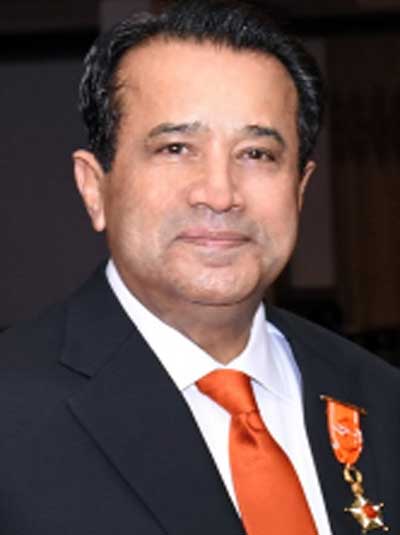
KARACHI: As Pakistan prepares to unveil the Federal Budget 2026-27, Omair Ahmed Siddiqui, Founder and CEO of Meta Frolic Labs, has urged the government to provide long-term fiscal certainty to the country’s rapidly growing information technology sector by extending the concessionary tax regime for IT exporters and freelancers for at least ten years.
Omair Ahmed Siddiqui says Pakistan’s IT industry has emerged as one of the country’s most promising export sectors, generating valuable foreign exchange, creating high-skilled employment opportunities, and strengthening Pakistan’s presence in the global digital economy. He says sustaining this momentum requires a predictable and investor-friendly policy framework that encourages long-term business planning and investment.
Meta Frolic Labs is a technology and innovation company focused on software development, digital transformation, emerging technologies, and scalable technology solutions for global markets. Siddiqui says the company works with businesses seeking to leverage technology for growth, innovation, and competitive advantage in an increasingly digital world.
Referring to the current taxation framework, Omair Ahmed Siddiqui says IT exporters and registered freelancers currently operate under a concessionary Final Tax Regime (FTR) of 0.25 percent on export receipts under Section 154A of the Income Tax Ordinance. He says this policy has played a significant role in supporting export growth and encouraging investment within the technology sector.
However, Omair Ahmed Siddiqui says the existing framework requires periodic renewals, creating uncertainty for businesses, investors, and international clients. He says long-term industries require long-term policy commitments, particularly in a sector where companies invest heavily in talent development, technology infrastructure, product innovation, and international market expansion.
Omair Ahmed Siddiqui says industry stakeholders, including P@SHA and FPCCI, have already recommended extending the concessionary tax regime for ten years, and he fully supports this proposal. He says a decade-long extension would provide much-needed fiscal predictability and allow technology companies to make strategic investments with greater confidence.
According to Omair Ahmed Siddiqui, policy stability is one of the most important factors considered by both local and international investors when evaluating investment opportunities. He says frequent uncertainty regarding tax treatment can discourage expansion plans and affect investor sentiment, whereas a long-term commitment would signal that Pakistan is serious about nurturing its digital economy.
Omair Ahmed Siddiqui says extending the 0.25 percent FTR framework for ten years would generate multiple benefits for the national economy. He says it would strengthen investor confidence, encourage the establishment of new technology ventures, support export growth, attract foreign investment, and help Pakistan compete more effectively with regional technology hubs.
He further says Pakistan possesses a young, talented, and globally competitive technology workforce capable of delivering world-class services and products. However, he says talent alone is not enough; supportive policies and regulatory certainty are equally important for achieving sustainable growth.
Omair Ahmed Siddiqui says the Federal Budget 2026-27 presents an important opportunity for policymakers to reinforce their commitment to the technology sector. He says extending the concessionary tax regime for IT exporters and freelancers should be viewed not as a tax concession but as a strategic investment in one of Pakistan’s highest-potential industries.
Siddiqui also presents some of related recommendations for the Federal Budget 2026-27, he advised the following measures can significantly strengthen Pakistan’s digital economy and technology exports:
Facilitate Access to International Payment Gateways
Omair Ahmed Siddiqui says the government should facilitate access to international payment gateways such as PayPal or introduce a comparable government-supported solution. He says Pakistani freelancers and IT companies continue to face challenges in receiving payments from international clients. Efficient and seamless payment mechanisms are essential for enhancing Pakistan’s competitiveness in the global digital economy.
Increase Foreign Currency Retention for IT Exporters
Siddiqui says IT exporters should be allowed to retain a larger portion of their export earnings in foreign currency accounts. He says technology businesses frequently require payments for cloud services, software subscriptions, digital tools, international marketing campaigns, and overseas vendors. He says greater flexibility in utilizing foreign exchange earnings would support business growth and international expansion.
Introduce Incentives for AI, R&D, Cybersecurity, and Emerging Technologies
Omair Ahmed Siddiqui states the government should introduce targeted tax incentives, grants, and support programs for investments in Artificial Intelligence (AI), Research and Development (R&D), cybersecurity, emerging technologies, and workforce upskilling initiatives. The future global economy will be driven by innovation. He says Pakistan must position itself as a producer of advanced technology solutions rather than merely a consumer.
Prioritize Pakistani Technology Companies in Government Projects
Omair Ahmed Siddiqu suggests that qualified Pakistani software houses and technology firms should be prioritized in government digital transformation and e-governance projects while maintaining transparent and merit-based procurement processes. Local companies possess the expertise needed to deliver innovative solutions and can play a major role in modernizing public services. He says this approach will simultaneously strengthen the domestic technology ecosystem.
Introduce Incentives for Export-Generating Technology Companies
Siddiqui says the government should introduce incentives and recognition programs for companies that generate foreign exchange earnings by attracting international clients and expanding Pakistan’s IT exports. He says rewarding export-oriented success stories will encourage more businesses to pursue global markets. Such measures will directly contribute to national economic objectives and export growth.
Streamline International Banking and Cross-Border Operations
Omair Ahmed Siddiqui points out that international banking processes, merchant account approvals, foreign remittance procedures, and cross-border business operations should be simplified. He says many technology companies face operational challenges when engaging with global clients and service providers. Removing these barriers will improve Pakistan’s attractiveness as a destination for technology investment and international business partnerships.
Strengthen Support for Startups and SaaS Companies
He says dedicated support programs, funding mechanisms, and growth incentives should be established for startups, Software-as-a-Service (SaaS) companies, and technology entrepreneurs. He says startups are often the source of breakthrough innovations, high-value jobs, and future export revenues. Supporting entrepreneurial growth today will help build the globally competitive technology companies of tomorrow.
“The future of Pakistan’s digital economy depends on consistency, confidence, and competitiveness. A ten-year extension of the existing 0.25 percent Final Tax Regime would send a strong message to entrepreneurs, investors, and global technology partners that Pakistan is committed to becoming a leading destination for technology exports and innovation. The government now has an opportunity to transform policy certainty into economic growth and ensure that Pakistan’s IT sector continues its upward trajectory as a major contributor to national exports and foreign exchange earnings.” Omair Ahmed Siddiqui, Founder and CEO of Meta Frolic Labs tells The Financial Daily.