Imran zakir
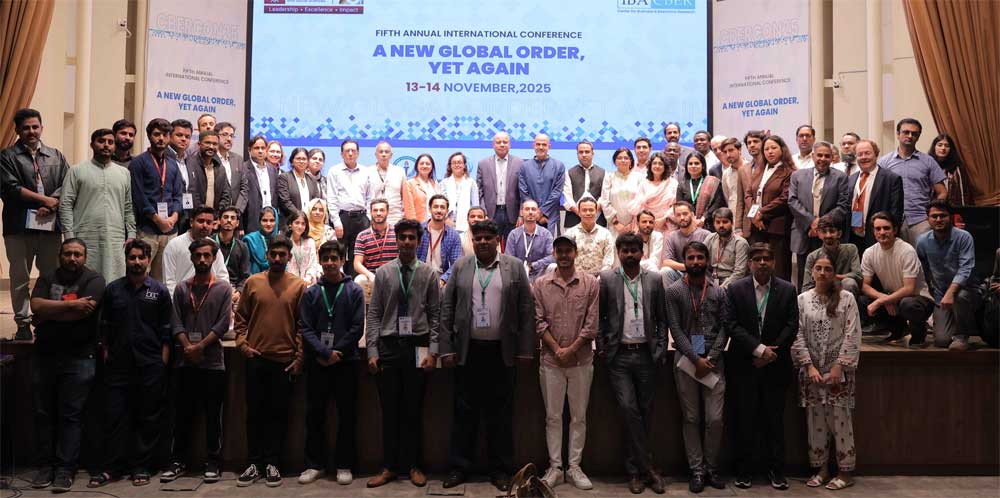
KARACHI: Pakistan’s hard-won progress in reducing poverty has stalled after nearly two decades of consistent improvement, economists and development experts cautioned at the IBA’s SESS Conference, held on November 13-14, 2025, at the Institute of Business Administration’s main campus in Karachi.
The two-day conference, hosted by the School of Economics and Social Sciences (SESS), brought together leading policymakers, researchers, and international development specialists to discuss Pakistan’s deepening economic vulnerabilities. Hina Rabbani Khar, Chair of the National Assembly’s Foreign Affairs Committee, delivered the keynote address, warning that Pakistan could “slip back into a poverty trap” unless decisive reforms are undertaken.
Speakers drew extensively from the World Bank’s new Poverty Assessment Report, which provides a sobering picture of Pakistan’s socioeconomic trajectory. The report highlights that while poverty in Pakistan declined sharply between 2001 and 2015-driven primarily by non-agricultural labor income, urban growth, and rising household earnings-progress has flattened since 2018-19, underscored by a series of compounding crises.
Conference panelists outlined the major factors behind the stagnation:
” Severe economic instability, including high inflation, currency depreciation, and slow GDP growth.
” Political disruptions and policy inconsistency, which have undermined investment and private-sector expansion.
” Climate shocks, particularly floods and extreme weather, which disproportionately affect low-income